

Information Board
The Mystery of the Pereg House
The ruins on a hill in the middle of the forest are known as the Perecký House (Pereg House).
Low stone walls, large embankments and flat terraces in the surrounding area provide evidence that vineyards once existed here. Winegrowers built simple shelters for themselves.
The ruins, with their carefully constructed masonry walls, have an ancient appearance and are rather unusual for a vineyard setting.

What Did Archaeological Research Reveal?
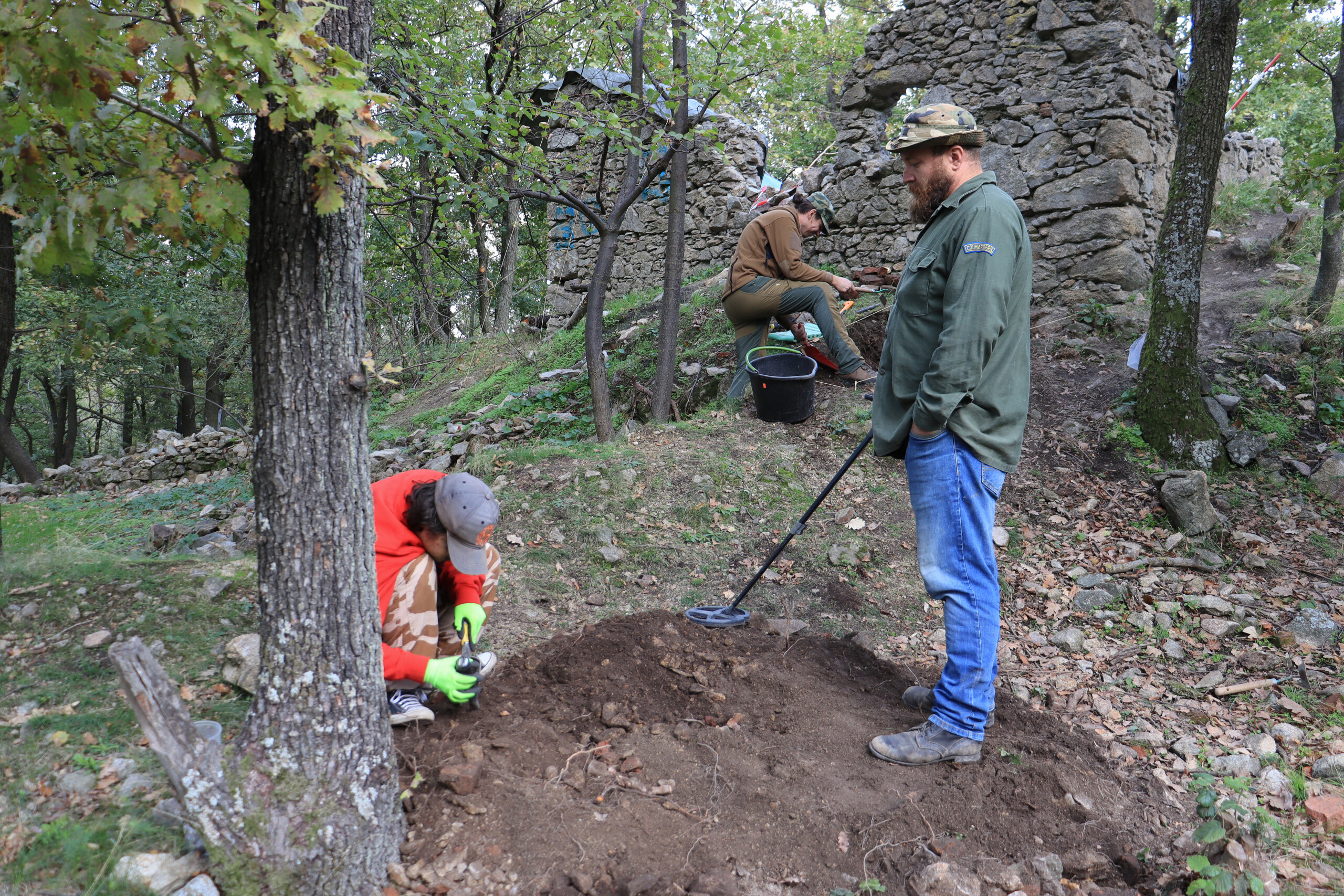
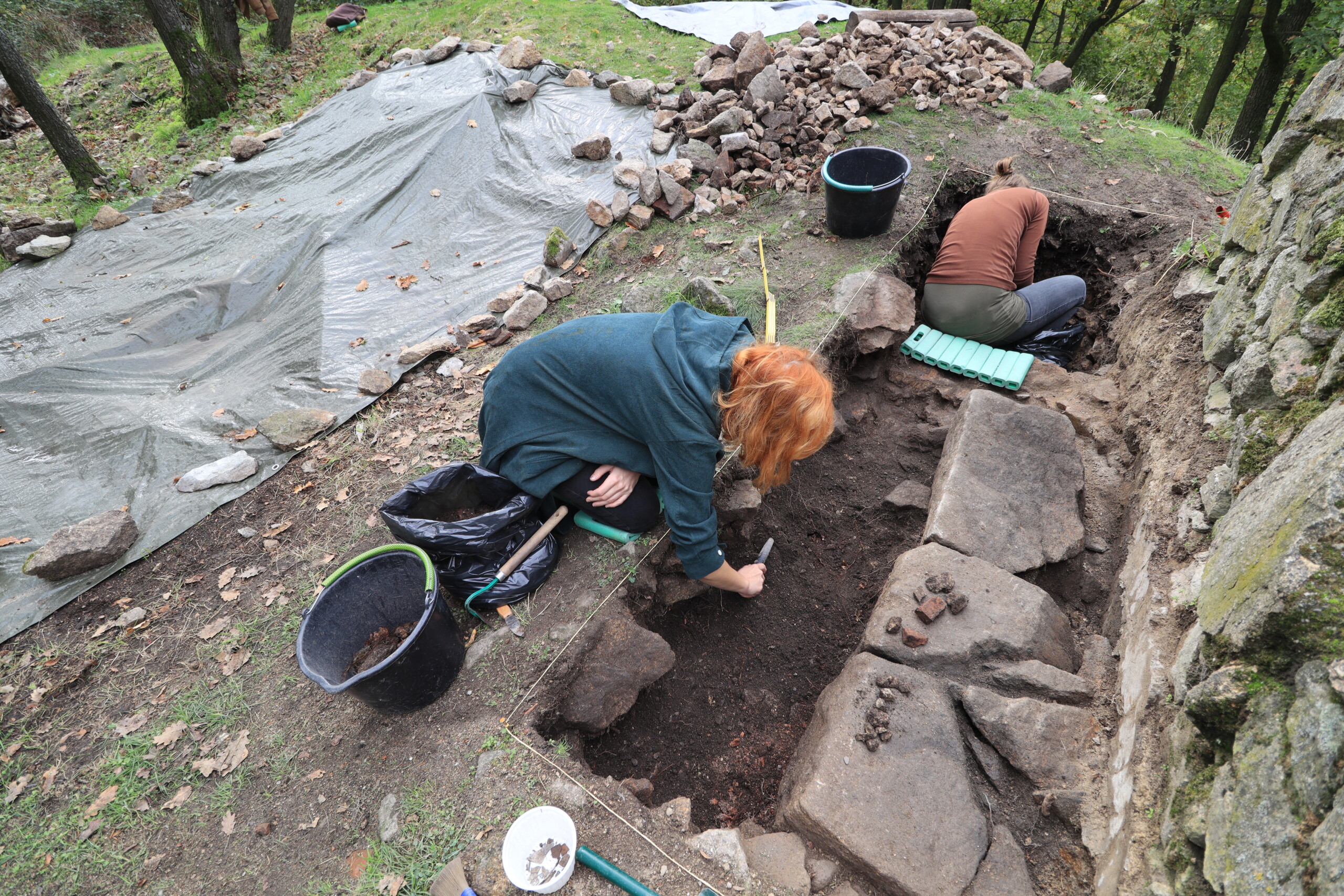
Archaeological excavations carried out in 2024 and 2025 attempted to shed light on the history of the building.
The oldest finds include fragments of medieval pottery. They provide evidence that people were already using this site in the 15th century, most likely for growing grapevines.
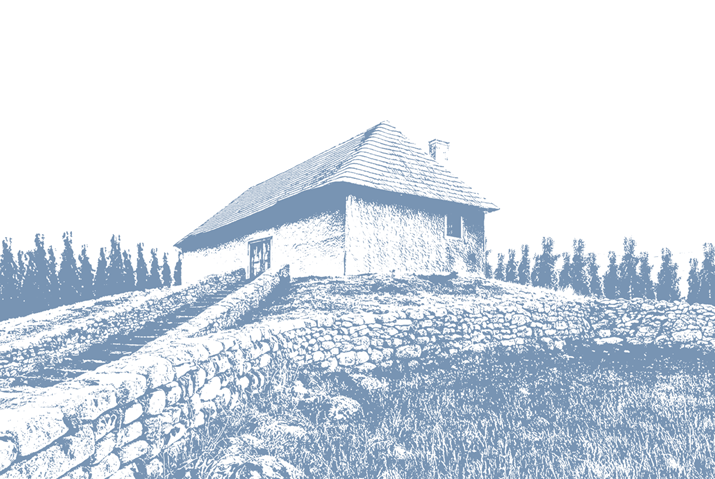
According to the research findings, supported by radiocarbon dating, the building was constructed sometime between the 16th century and the first half of the 17th century. With a floor plan measuring 8 × 6.30 m, it was twice the size of the present-day ruins.
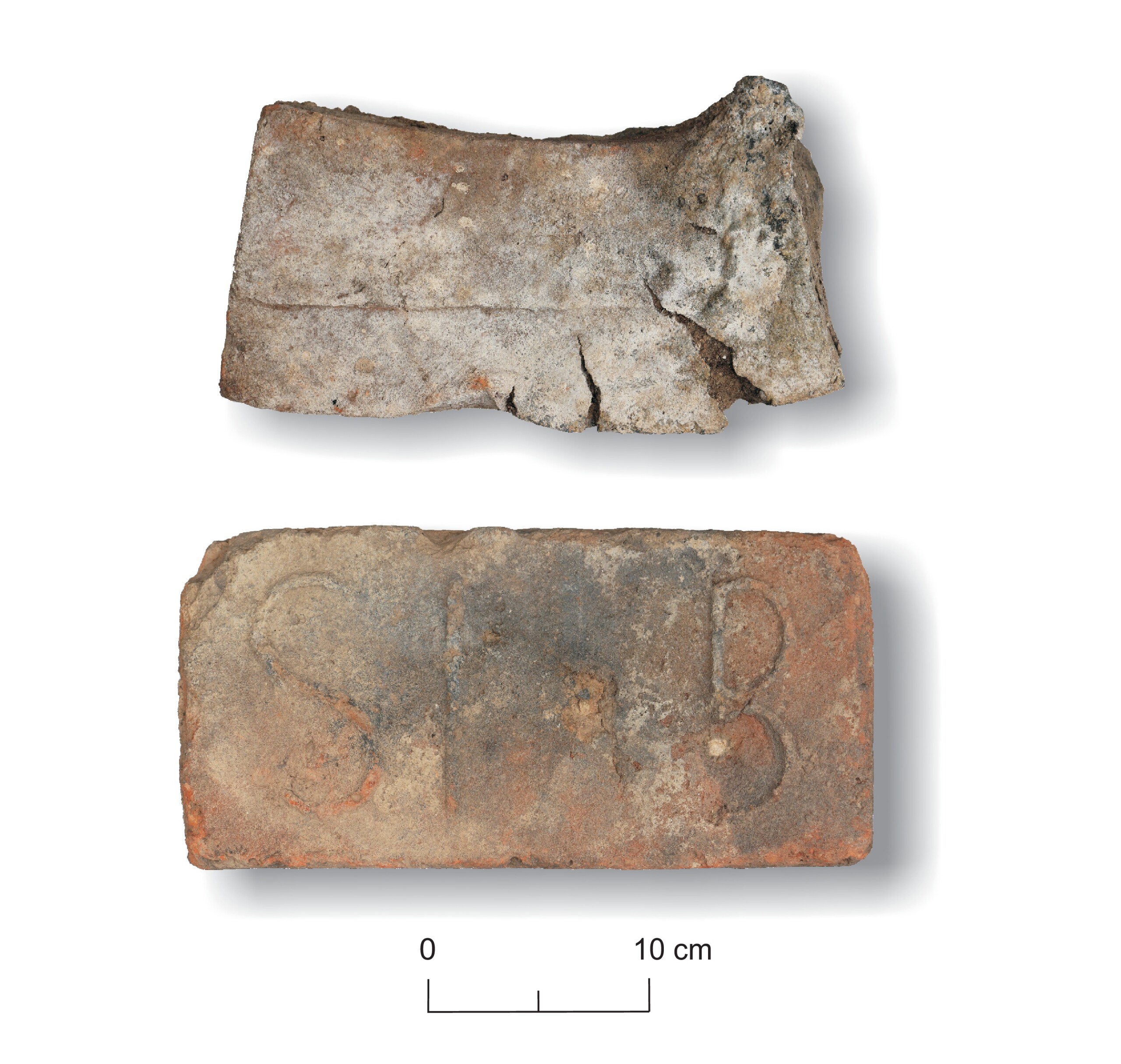
The builders used local stone and lime mortar. Some structural elements were built from bricks. The walls were covered with white plaster, and the roof was covered with wooden shingles.
It is believed that the stone staircase already led to the entrance of the house during this period. The small window may also date from this construction phase.
After some time, the building was destroyed by fire. It was probably rebuilt in the second half of the 19th century, but only to half its original size (corresponding to its present-day layout).
A doorway was created in the middle of the new southeastern wall, with a large window opposite it. The room had a wooden floor and plaster decorated with a floral pattern.
In the first half of the 20th century, the building was renovated. It received new ceramic roof tiles, plasterwork and doors.
The building was probably abandoned around the middle of the 20th century. Its walls partially collapsed, but were later rebuilt to their present appearance.
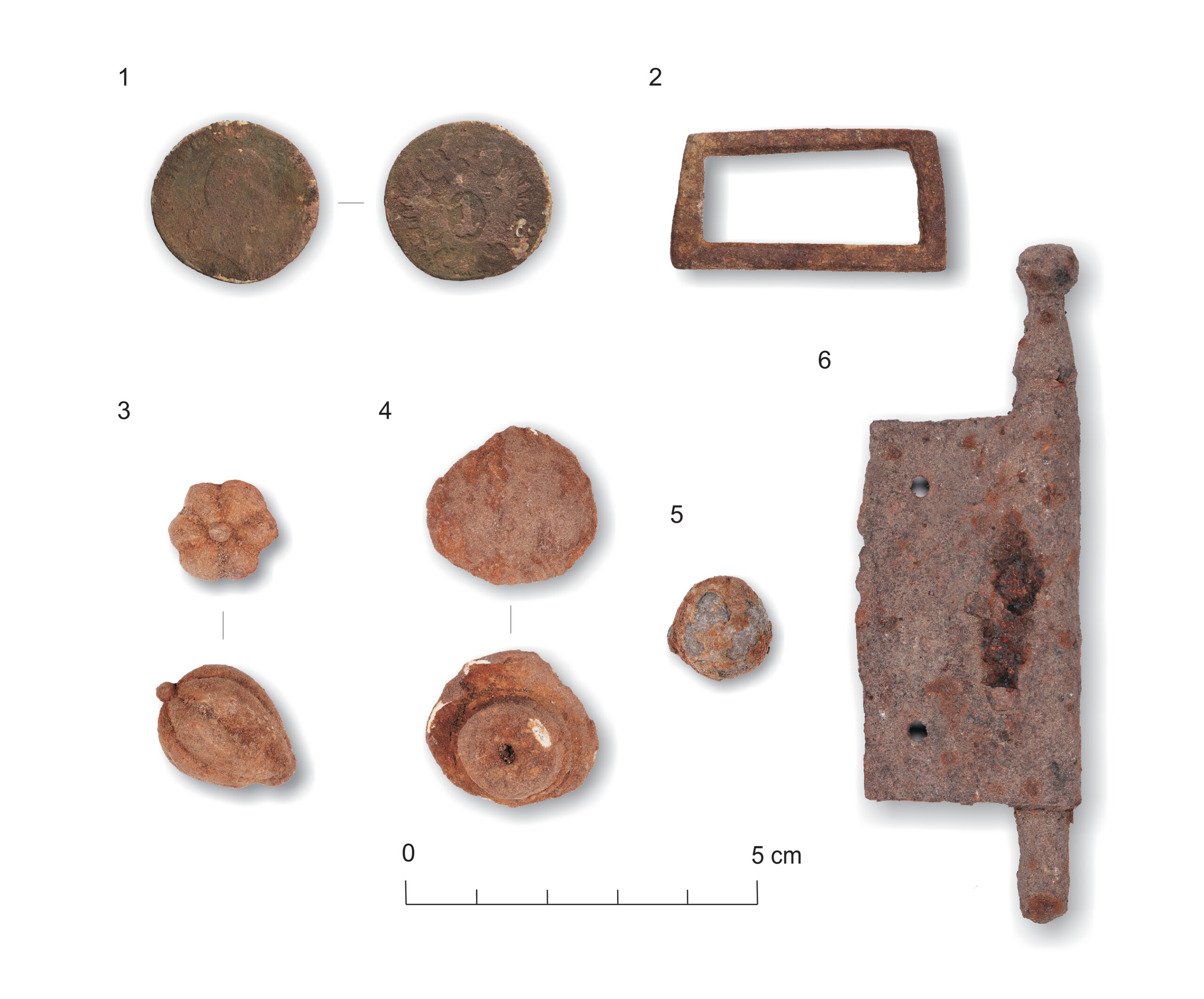
The “inhabitants” of the house left behind pottery fragments, a coin dating from 1800 and various types of ammunition. They were most likely vineyard guards – watchmen who worked for the so-called Pereg Office, which oversaw the vineyards.
To what extent the house was used by the office’s highest-ranking official, the Pereg, remains uncertain.
Good to know
How Do Archaeologists Read the Past?
Archaeologists don’t just search for treasures. They study traces left behind by people – walls, pottery fragments, coins, tools, pieces of brick and the remains of old buildings.
What matters is not only what they find, but also where they find it and in which layer of soil it was buried. Every object is a small clue, and only by bringing all the evidence together can we piece together the story of the past.
In their work, archaeologists use shovels, small hoes, trowels, brushes, measuring tapes and sieves for sifting soil. They carefully measure, photograph, draw and document their finds because, once excavated, a site will never look exactly the same again.
Today, modern technologies also help them in the field – drones, digital maps, GPS and three-dimensional models.
In the Little Carpathians, archaeologists don’t just search for castles or great treasures. They also investigate old vineyards, stone walls, terraces, piles of cleared stones and the remains of buildings hidden in the forest.
These seemingly insignificant traces reveal how people once used the landscape, cultivated grapevines and protected their harvests. The Pereg House is therefore like an open book – instead of letters, archaeologists read stones, layers of soil and objects buried beneath the ground.
Activity
Play the Historical Researcher
During archaeological research, scientists encounter not only objects but also old documents and written records. These often contain words that we hardly ever use today.
Can you identify which of them are archaisms and which are historisms?
- Richtár (Village Reeve)
- Pereg
Do You Know the Difference?
- An archaism is an old word that has been replaced by a newer term.
- A historism is a word referring to an object, position or phenomenon that no longer exists.
Correct answers – check your solution:
Richtár – Archaism
Today, we would say mayor. This is an older term for a position that still exists today.
Pereg – Historism
An official of the vineyard administration. This position no longer exists today.
 22
Next Point
Observation Point – Small Gazebo