

Antimony mines are a lesser-known but extremely interesting part of Pezinok’s history. Although the city is primarily associated with viticulture and winemaking today, for centuries it was also an important mining center in the Little Carpathians.
In addition to gold and pyrite, antimony was also mined in the Pezinok mining district, with extraction beginning at the end of the 18th century and continuing with varying intensity until the end of the 20th century.
Significant development occurred mainly in the 20th century, when antimony became the main raw material for the Pezinok Rudné bane plant. The deposit was accessed through several adits, and part of the ore was also extracted using surface methods.
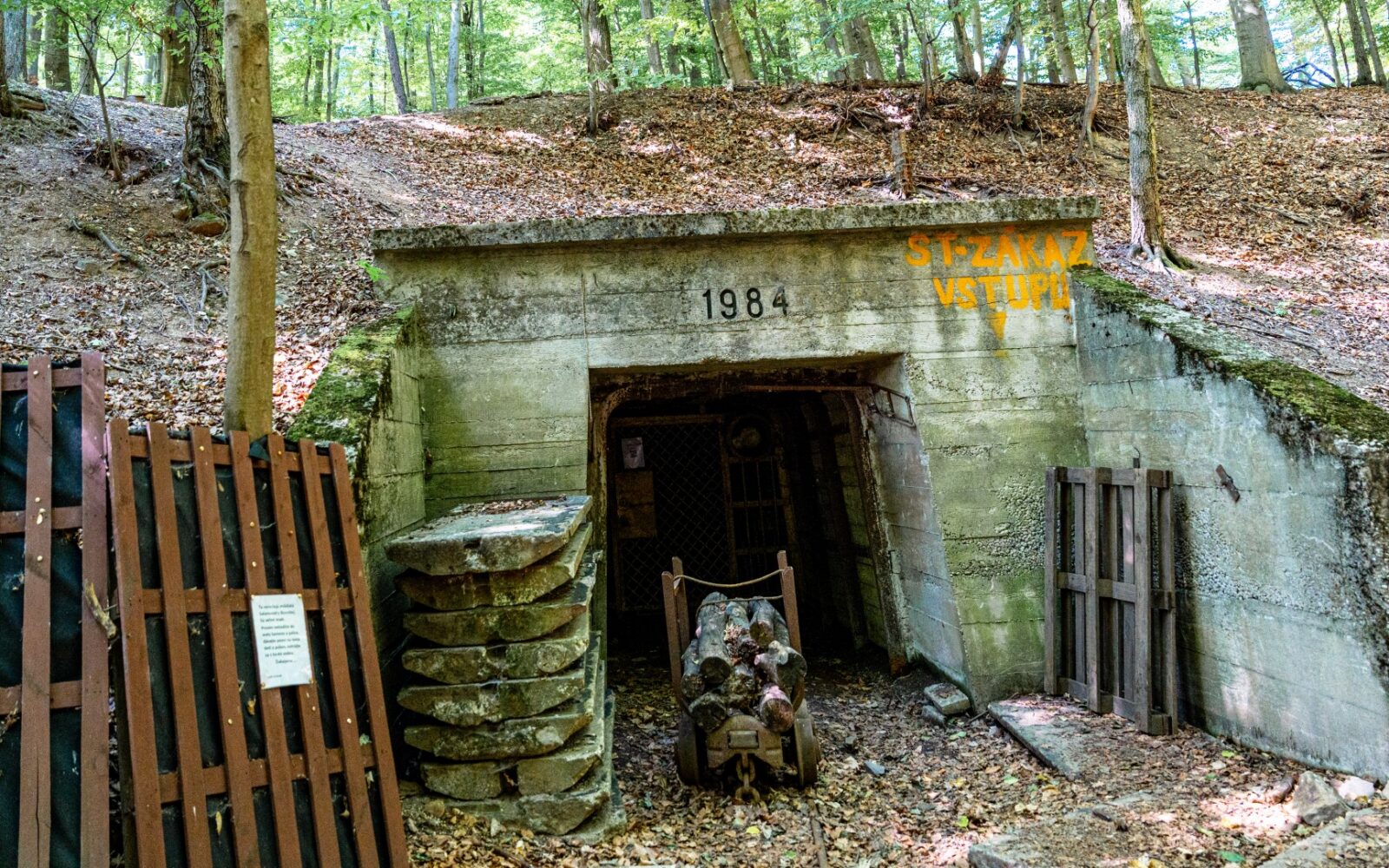

Antimony mining and processing
The extracted ore then underwent processing, during which the antimony concentrate was separated from other material.
An extraordinary technical curiosity is that as early as 1906, the first flotation ore processing plant in Austria-Hungary was put into operation in Pezinok.
In the second half of the 20th century, antimony mining was one of the city’s significant industrial activities, with dozens of miners and other employees working at the plant.
The decline of mining and its legacy
However, the gradual depletion of higher-quality reserves and the deteriorating quality of the ore led to a decline and finally to the end of mining in the 1990s.
The remains of adits, surface quarries, and other mining structures still serve as a reminder of the period when the daily work of Pezinok miners took place beneath the slopes of the Little Carpathians.
This part of history is now also showcased by the Mining Nature Trail, which leads past sites associated with the mining of antimony, pyrite, and gold, thus preserving one of the important chapters of Pezinok’s industrial heritage.
Possibility of visiting the Minulosť adit
The Minulosť adit does not have a regular visiting schedule – entry is organized with a guide from the Little Carpathian Mining Association, for example, during selected events.
In August 2026, its guided tour is also part of the Children’s Mining Academy.