


Information Board
The Story of Pezinok’s Vineyards
If I were to tell you the story of Pezinok’s vineyards as a vineyard reeve, I would begin with stone.
First, there were the sun-facing slopes of the Little Carpathians. They consisted mainly of granite and gneiss. The hard, rocky soil gives the wine its character. Without it, we would have nothing to pour today.
Grapevines were already growing here during the time of Great Moravia.
However, when settlers from German lands arrived, things began to change.
New cultivation methods, better division of land, and even names for the vineyards: Mügl, Altenberg, Wimperg…
Today, only the remains of the Perecký House stand on the boundary between the Mügl and Haffenperg vineyard areas.
A reminder of the days when the slopes were bustling with activity.

Everything Was Carefully Measured
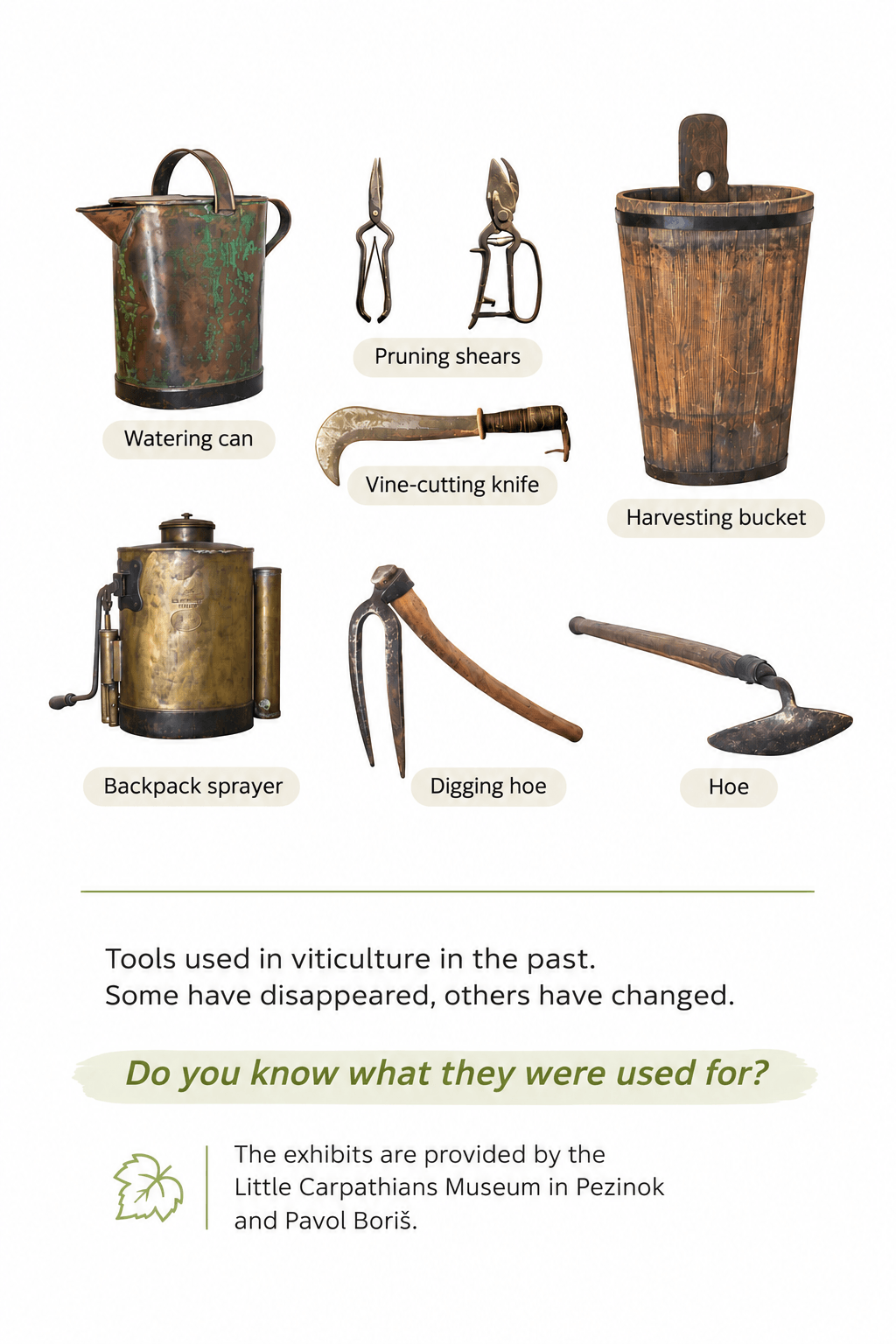
In fathoms, stocks or kopáč units – the latter referring to the area of land one person could cultivate with a hoe in a single day.
When a vineyard produced a harvest, a levy called hôrne had to be paid. It was paid in wine or grape must, measured in units called okov.
And one okov? More than 54 litres.
I Have Also Lived Through Difficult Times
Phylloxera and downy mildew destroyed many vineyards at the end of the 19th century.
But we learned from these hardships, introduced new cultivation methods, and viticulture began to flourish once again.
When you look at the slopes of Pezinok today, you see more than just a landscape.
You see the work of stone, sunshine and generations of winegrowers.
Good to know
Vineyards with Their Own Names
The winegrowing landscape of Pezinok has long been divided into individual vineyard areas. Each had its own name, allowing winegrowers to know exactly where each vineyard was located.
Many of these names originated in the Middle Ages and are still used today. Among the best known are Mügl (Nígle), Haffenperg (Holoperegy), Altenberg (Stará hora), Wimperg (Vimpergy) and Hausperg (Hausperky).
The Perecký House stands right on the boundary between the Mügl and Haffenperg vineyard areas – a silent witness to Pezinok’s winegrowing past.
Learn more
A Vineyard Cannot Be Established in a Year
Establishing a new vineyard has always been demanding. First, the soil had to be prepared and young grapevines planted. Then, winegrowers had to wait several years before the first harvest.
That is why landowners often exempted newly planted vineyards from fees for a certain period. They wanted to make things easier for winegrowers in the early years and encourage the establishment of new vineyards.
A record from the town register dating back to 1617 mentions a newly established vineyard called Neuberg, which was exempt from fees for seven years. Only after this period did its owners begin paying the hôrne levy.
Wine Supported the Entire Town
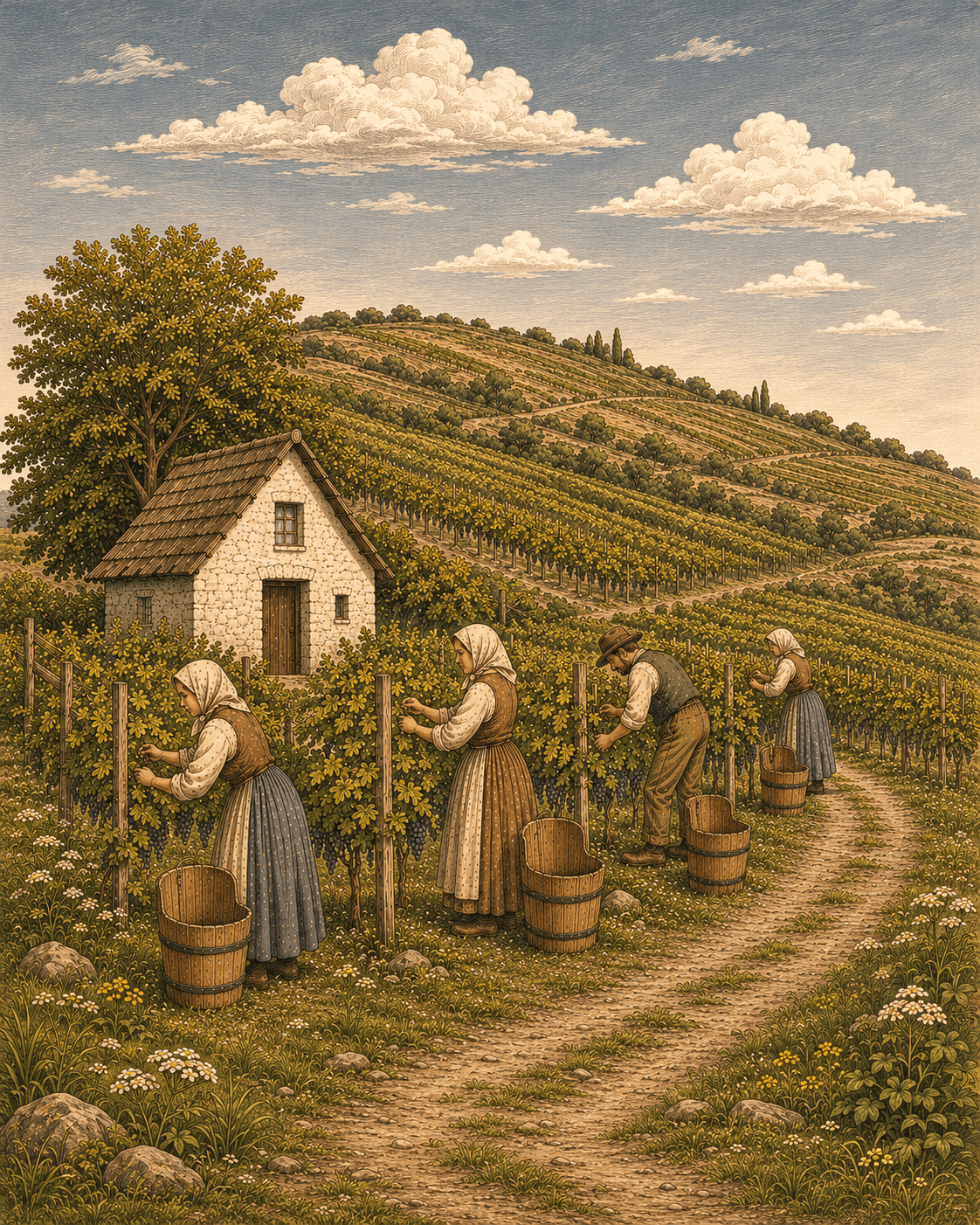
Viticulture was not just the work of winegrowers. Wine production supported dozens of other crafts. Coopers made barrels, blacksmiths repaired tools, carters transported wine, and merchants sold it both locally and beyond the region.
Game
Pereg Silván’s Cipher
Only one word in the entire network of terms is special. Find it. Once you discover it, write it down – it is part of the code that Pereg left behind.
Hint:
The word you are looking for tells us about the memory of the landscape. It shows us how things happened. Thanks to this, we can recognize what is wise, understand connections and choose the right path for ourselves and for nature.
Activity
Imagine ye had come upon an old letter penned by a vineyard reeve of Pezinok. Would ye make sense of it?
Dear Ambróz,
This year I have planted me a new vineyard upon these lands. They tell me I need not pay the hôrne levy till the vines bear their first fruit, and glad I am to hear such tidings!
There be work aplenty, I tell thee. All the livelong day have I toiled with my hoe, tending near a whole kopáč of land, and by eventide I can scarce feel mine own hands.
When the harvest comes, I must render my tithe, and we shall measure the wine in okov vessels, as is the custom of our forefathers.
Should the harvest prove bountiful, do come and visit me, dear friend. We shall share a cup of fine Pezinok wine and make merry together.
Thy faithful friend, Silván, vineyard reeve of Pezinok
Did You Understand All the Terms?
- Hôrne – a levy paid for cultivating a vineyard on land owned by a feudal lord.
- Tithe (Desiatok) – a church tax amounting to one-tenth of the harvest.
- Kopáč – an area of vineyard that a winegrower could cultivate with a hoe in one day.
- Okov – a historical container and unit of measurement for wine, with a capacity of approximately 54 litres.
 20
Next Point
História Plexi tabuľa

