

Information Board
Stone Pile at Grandma Dorka’s
Come closer, and I’ll tell you how these stone piles came to be.
Today, you call them “cultural heritage”, but for us, they mostly meant hard work.
When we cleared the slopes above Pezinok and planted grapevines, the ground was full of stones.
You’d dig into the soil with a kopáľ – a type of hoe with two prongs – and pull out a huge rock instead of soil.
And what would you do with it? Stone by stone, you’d pile them up along the edge of the vineyard – and a stone pile would begin to grow.
A Changing Landscape
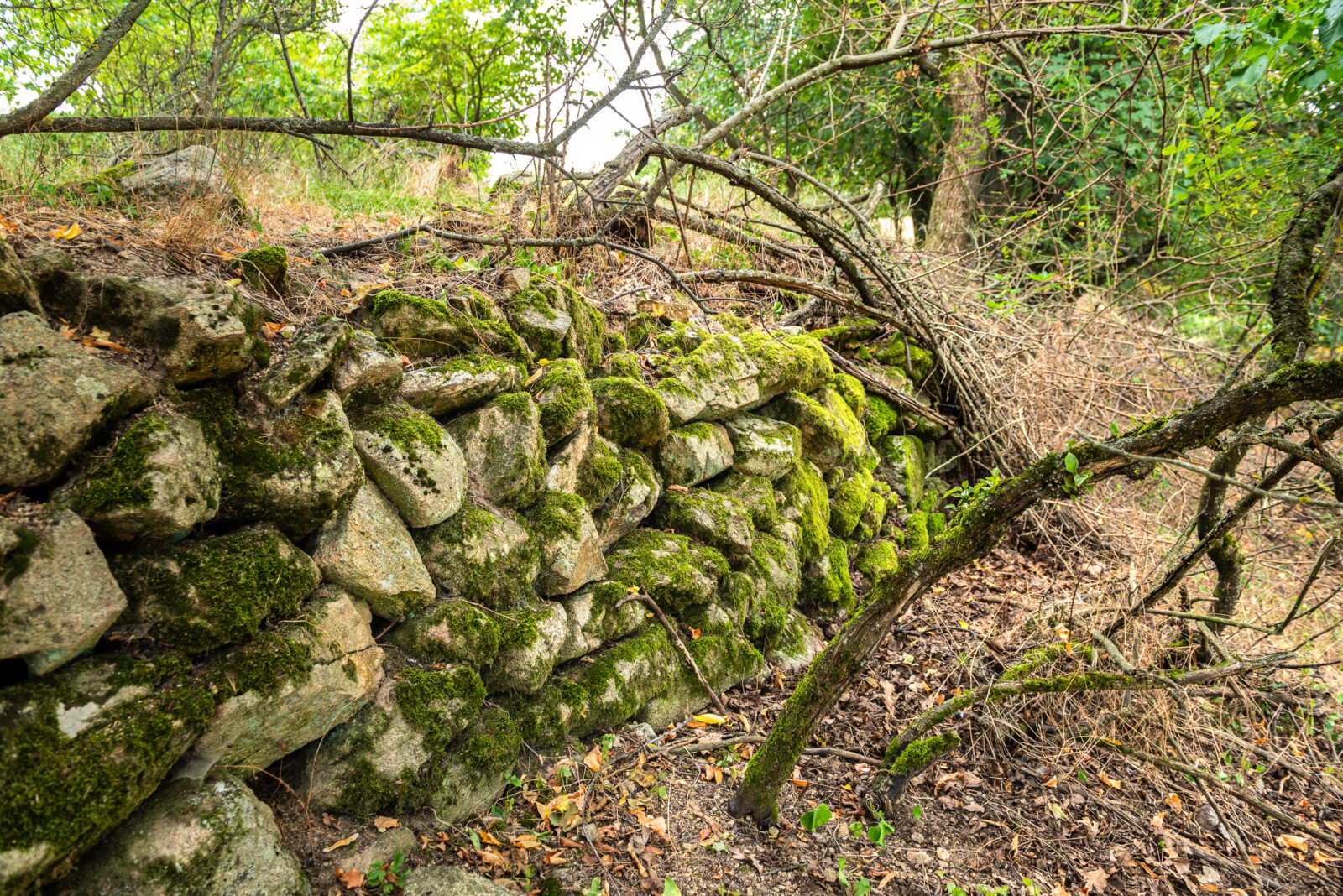
Today, you find these stone piles in the forest and wonder what they’re doing there.
There used to be vineyards here. The forest came much later.

More Than Just a Stone Wall
It marked a boundary – so the neighbour knew where his grapevines ended and mine began.
And if it collapsed? We’d both repair it. No excuses.
The stone piles stabilised the slopes, prevented soil erosion, slowed down flowing water and stored the sun’s warmth where the grapevines needed it.
A Stone Map
We didn’t carry the stones from far away – they all came from the immediate surroundings. Granite, gneiss, phyllite and other rocks.
Try Looking at It Differently
The next time you pass a stone pile, don’t see it as just an old stone wall.
It’s like “Lego” for winegrowers – stone by stone, carefully stacked by human hands.
And believe me – without cement or an architect, it has stood here for hundreds of years.
Good to know
A Stone Pile Wasn’t Built in a Day
Stone piles were not built according to a plan or completed in a single season. Every stone came directly from the vineyard.
Whenever winegrowers came across a stone while cultivating the soil, they simply carried it to the edge of their land. Year after year, generation after generation, stone embankments gradually formed. Today, we consider them part of the cultural landscape.
Some stone piles took centuries to build.
A Stone Wall with Many Purposes
A stone pile was more than just a boundary between vineyards.
It helped stabilise the slope, prevented soil from being washed away during heavy rainfall and slowed down flowing water. During the day, it absorbed the sun’s warmth and gradually released it into the surroundings at night. This created more favourable conditions for growing grapevines.
It also provided shelter for lizards, insects and small mammals.
A Landscape Shaped by People
Today, many stone piles can be found deep within the forest. But that doesn’t mean they were built by foresters.
When phylloxera damaged the vineyards in the 19th century and some of them were never restored, nature gradually reclaimed the land. Forests grew over the former vineyards, but the stone piles remained as silent reminders of the work of generations of Pezinok’s winegrowers.
Activity
An Agreement Between Neighbours
You are winegrowers, and a shared stone wall stands between your vineyards. After heavy rainfall, part of the wall has collapsed.
What now?
- Who will repair it?
- Will you divide the work or the stones between you?
- What agreement would you make to remain good neighbours?
 26
Next Point
Wetland