

Information Board
Look around you. You’re not in a fairy tale – you’re standing in the largest natural company for miles around.
The trees are its full-time “employees”. They produce oxygen, filter dust, “drink” CO₂ (carbon dioxide – a gas we breathe out that contributes to global warming) and switch on the natural air conditioning in summer.
And imagine this – they work without a break. Without pay, without holidays.
What can a tree do?
- A single tree can produce around 1,000 litres of oxygen per day – enough for approximately ten people to breathe.
- At the same time, it’s like a small apartment building: it provides shelter for birds, insects, fungi and mosses.
- Its roots strengthen the soil, retain water and help protect the landscape from flooding.
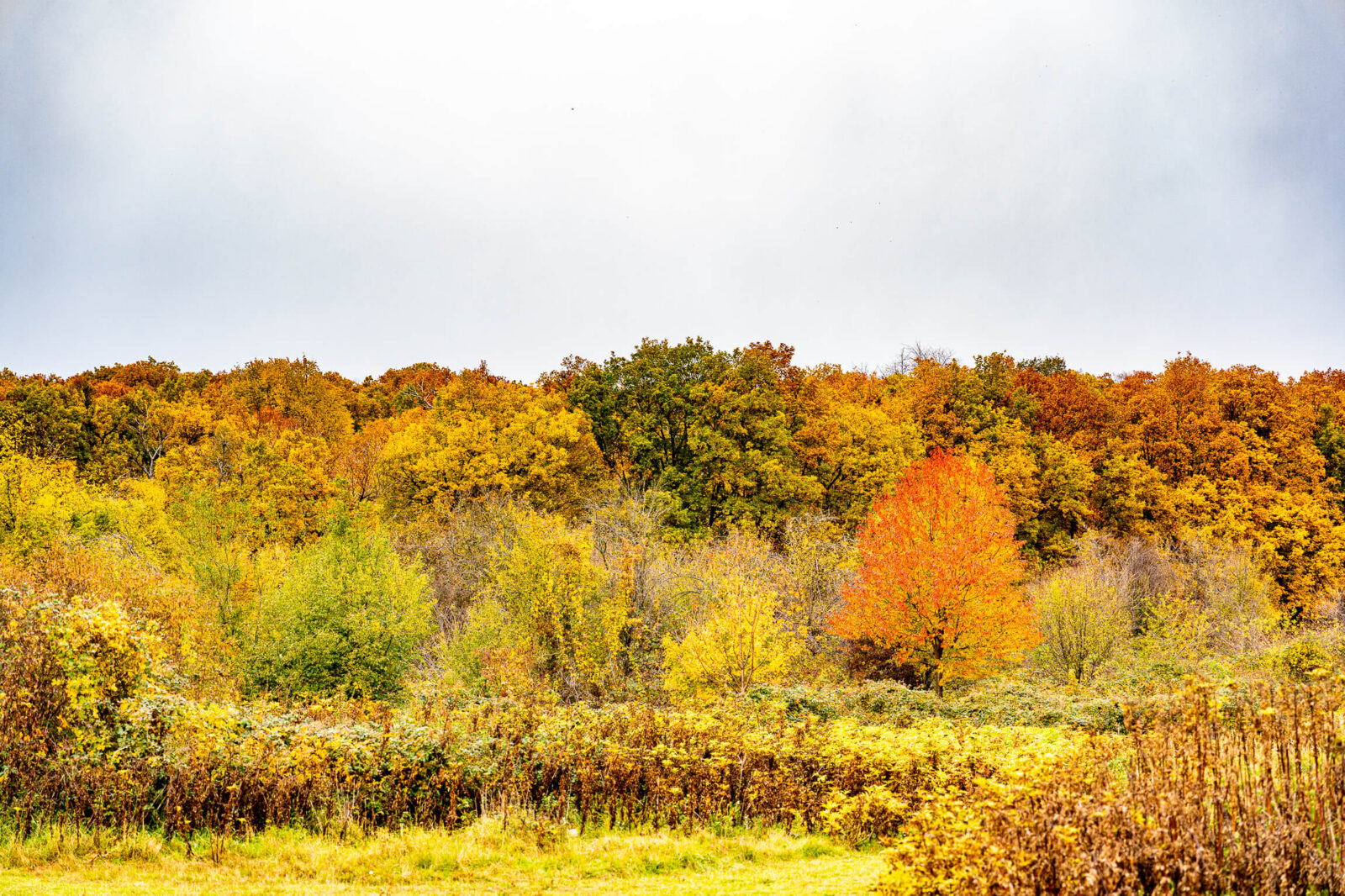
Do you know what we call a group of these amazing trees that covers an area of more than half a hectare and grows to a height of at least 5 metres?
That’s right – a FOREST!
In a forest, trees “network” with one another, creating a network that protects the landscape and the life within it.
In the Little Carpathians, you’ll mainly encounter beeches, oaks, maples, hawthorns and birches.
And occasionally, less noticeable perennial plants, such as butcher’s broom (Ruscus hypoglossum).
The forest works continuously – quietly but reliably. Believe me, I’m a botanist, so I know a thing or two about it.
All you need to do is stop for a moment and take notice.
Good to know
Did You Know That a Forest Has Several Layers?
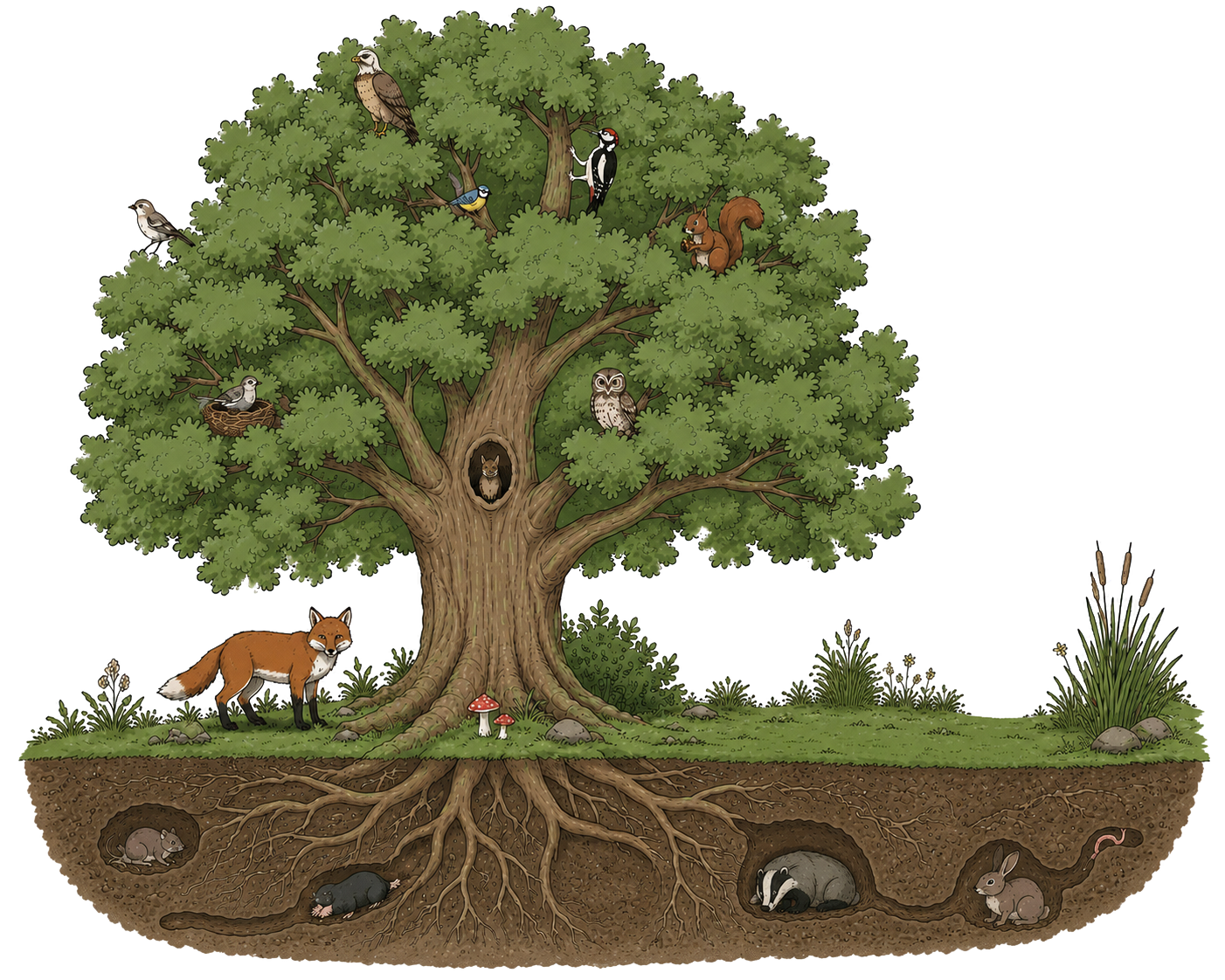
A forest is not just a group of trees. It functions like a large multi-storey building.
Birds and insects live in the treetops, small animals find shelter among the shrubs, and flowers, grasses and ferns grow in the herb layer.
Beneath the fallen leaves, fungi, earthworms and other organisms help break down dead organic matter into nutrients.
The Secret Network Beneath Our Feet
Beneath the forest floor lies a world we cannot see. Tree roots are connected to fungal threads, allowing trees and fungi to help each other obtain water and nutrients.
In return, the fungi receive sugars produced by the trees through photosynthesis. This relationship is called mycorrhiza.
Game
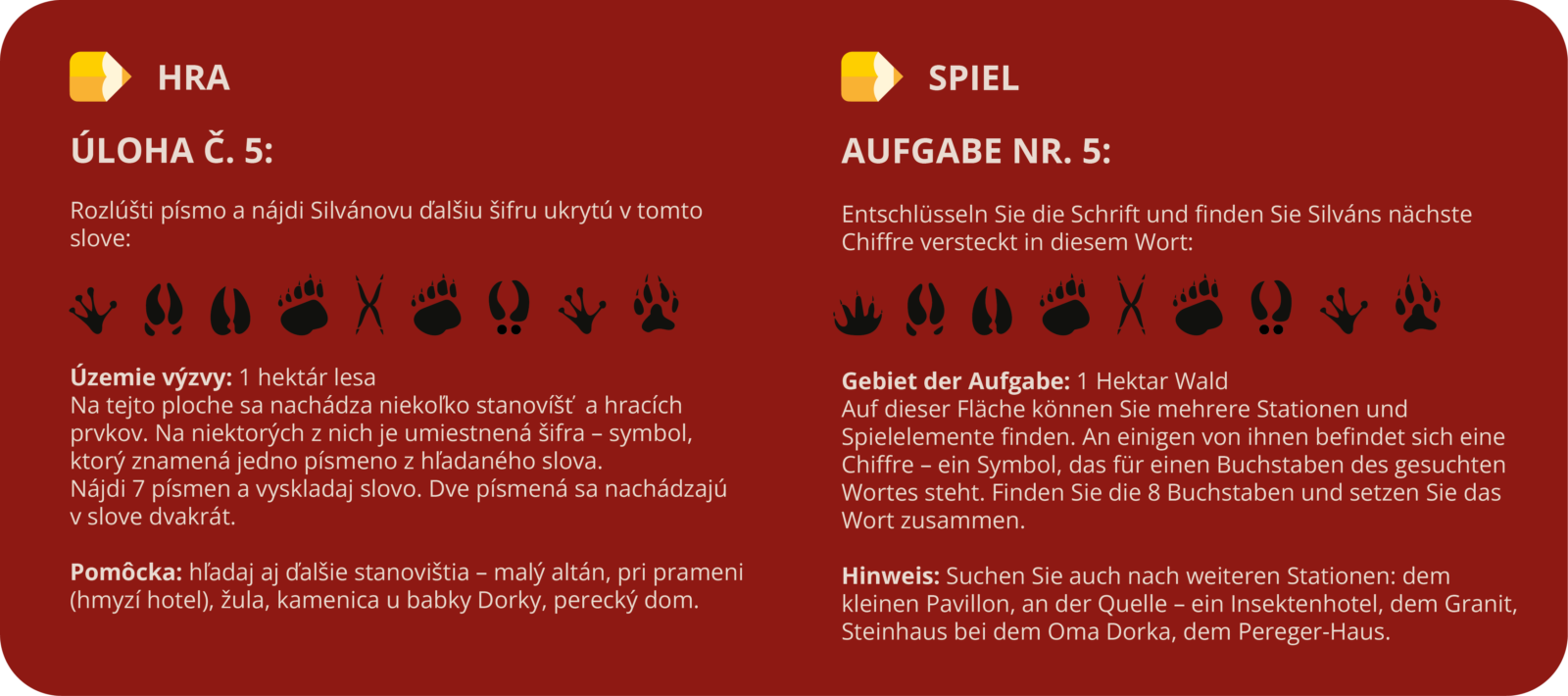
Silván the Pereg’s Cipher
At this station, you will find an explanation of another of Silván’s ciphers.
Around the Perecký House, there are many interesting educational and playful elements. Discover what makes Bratislava-type granite distinctive, and explore the tactile and rotating elements together with the students.
Activity
How Thick Is the Tree?
Choose a tree and first try to estimate the circumference of its trunk.
Then measure it using your own hands. Count how many hand widths it takes to go all the way around the trunk.
Hint:
- One child’s hand width ≈ 8 cm
- One adult’s hand width ≈ 10 cm
Compare your results. Who found the thickest tree? And whose estimate was the most accurate?
 18
Next Point
Game Evaluation at the Large Gazebo