

Information Board
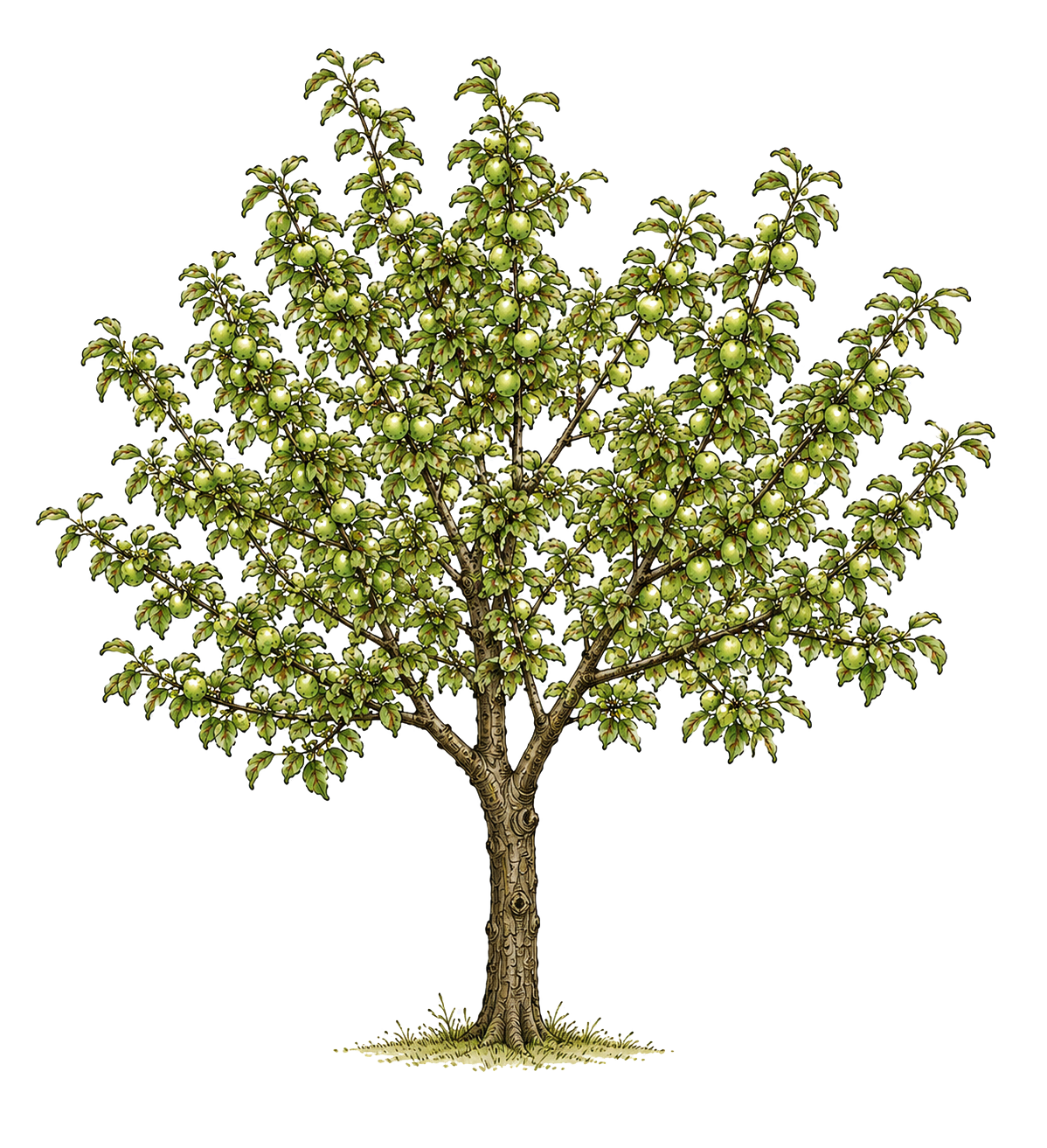
The green greengage (Prunus domestica subsp. italica) is a deciduous fruit tree of medium height with a spherical crown, cultivated for its sweet, greenish-yellow fruits.
It requires a sunny location, fertile, permeable soil, and is also suitable for garden greenery.
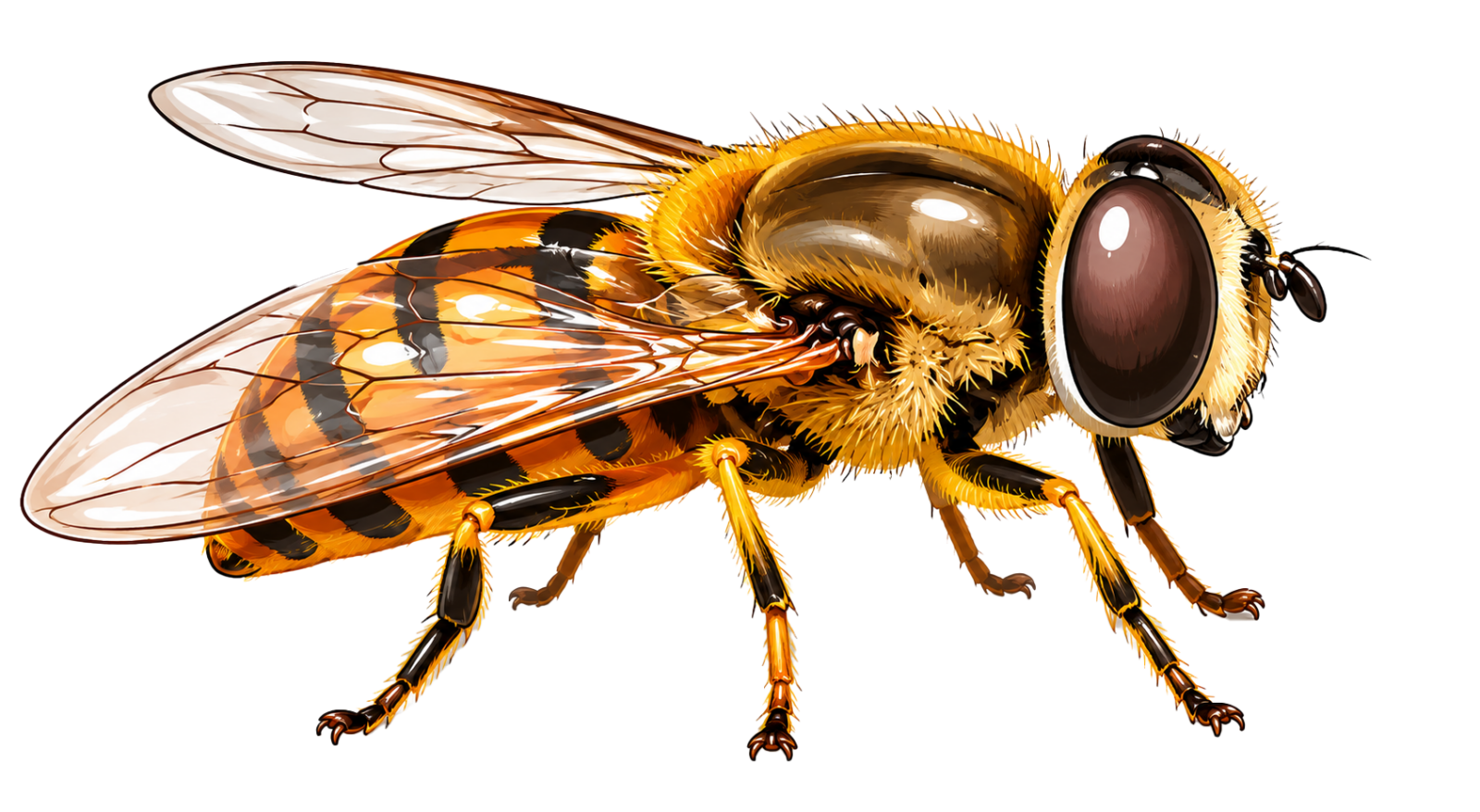
Hoverflies – Masters of Camouflage
When you spot a ‘bee’ hovering in the meadow like a small helicopter, you might actually be looking at a hoverfly.
Is it a bee, or isn’t it a bee?
It’s not! Hoverflies are actually flies that ‘disguise’ themselves as bees or wasps. They don’t have a sting, but their stripes make them appear dangerous – and birds prefer to leave them alone. This trick is called mimicry – when someone pretends to be dangerous, even though they are not.
Garden Helpers
Hoverflies are excellent pollinators. They fly from flower to flower, helping plants reproduce. And their larvae? They are small predators. Females lay their eggs near aphids – and the larvae feast on them with relish. Fewer aphids = more healthy plants.
An Interesting Life
Some hoverflies, such as the common drone fly, are even more surprising. Their larvae live in water and breathe using a long ‘tube’ – a kind of natural ‘snorkel’. The adults then fly to flowers as harmless ‘fake bees’.
Remember that not everything with stripes has to be a bee.
Learn More
Hoverflies – Harmless Helpers
Hoverflies belong to the family of flies, not bees. Adult hoverflies feed on nectar and pollen, making them important pollinators.
However, their larvae are completely different – many of them hunt aphids that damage plants. A single larva can consume several hundred aphids during its development.
How to distinguish a hoverfly from a bee?
Hoverflies can hover in place like a small helicopter and often dart suddenly sideways. Unlike bees, they have only one pair of wings, larger eyes, and shorter antennae.
Next time you see a striped ‘bee’, try looking closer – you might discover a hoverfly.
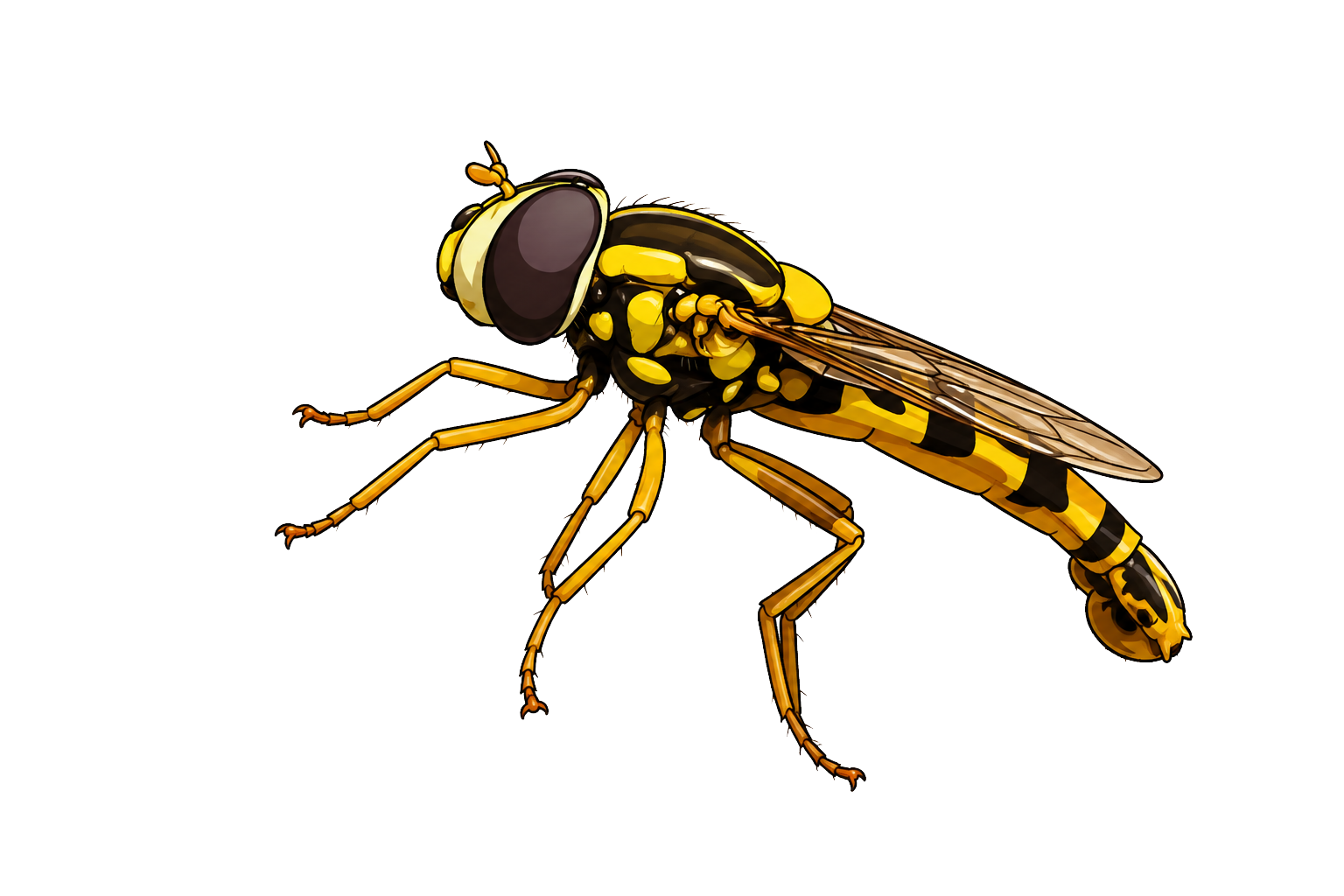
What is Mimicry?
Mimicry is a clever trick that some animals use to protect themselves from enemies.
Hoverflies have yellow and black stripes similar to bees or wasps, even though they have no sting and are completely harmless. Birds often mistake them for dangerous insects and prefer to leave them alone.

ACTIVITY
Consider:
Can you name at least two more animals that use mimicry or perfect camouflage?
If you were a small insect, what would you rather disguise yourself as so no one would catch you?
CoDe MoRe Project Partner:
Economic Agency Burgenland GmbH, Austria, model region territory – Rosalia-Kogelberg Nature Park;
https://wirtschaftsagentur-burgenland.at/
Economic Agency Burgenland, successor to Regionalmanagement Burgenland GmbH, acts as the project and coordination agency for the federal state of Burgenland and, in cooperation with municipalities and partners, implements projects in the areas of regional development, environment, and tourism at both national and international levels.
For over 25 years, it has connected local and cross-border stakeholders and, as the coordinating body for six nature parks, ensures their development, joint projects, and marketing with an emphasis on biodiversity and sustainability.

 11
Next Point
Common Blue