

Information Board (A)
A) Insect Hotel – All-Inclusive Without Reception
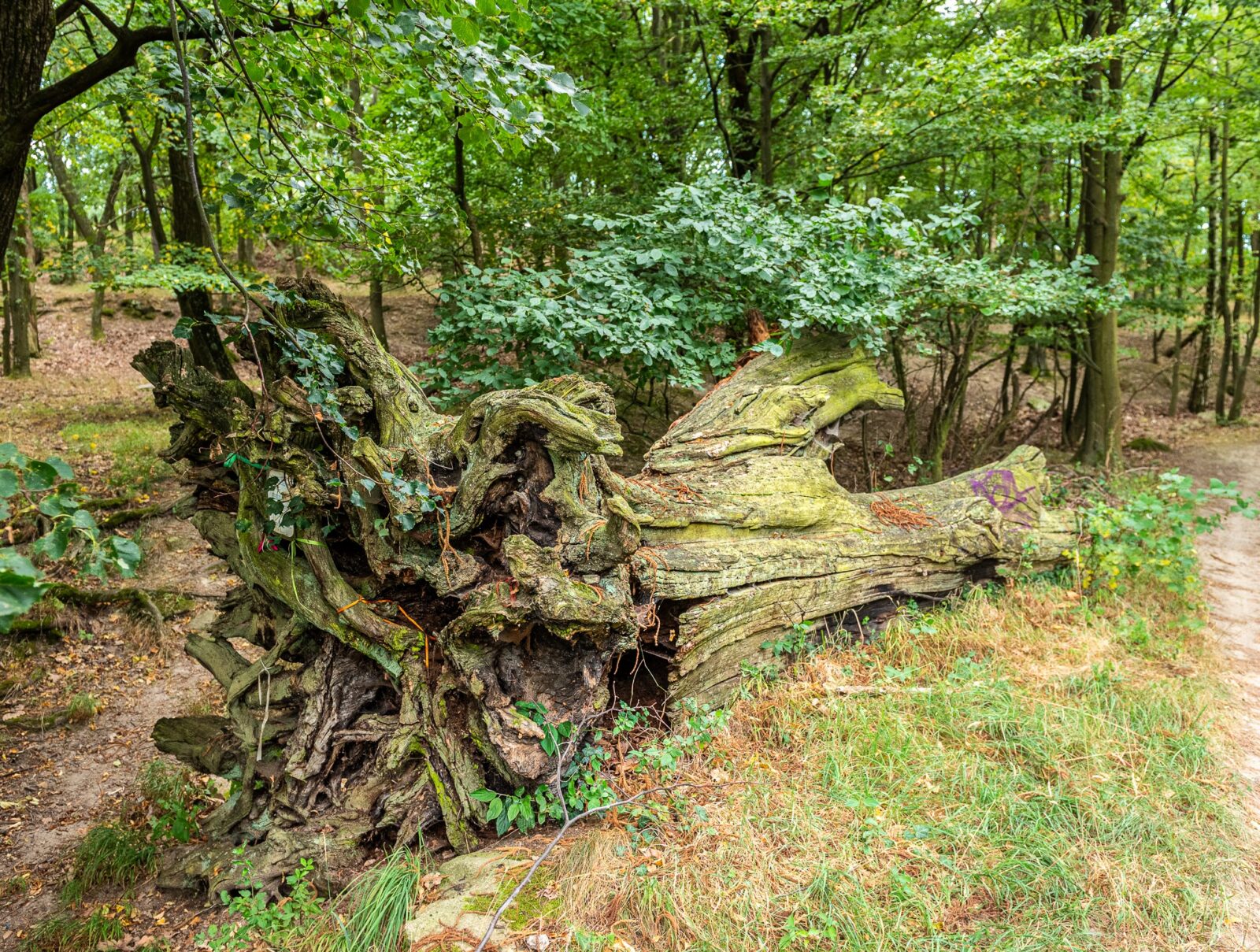
A fallen tree trunk, a standing dead tree, or peeling bark – all of these provide a home for many insect species, including pollinators.
The bigger the tree, the more “rooms” it has and the more diverse its residents.
Why is this important?
Stag beetles, longhorn beetles, and violet carpenter bees need dead wood for their development. Their larvae can develop in it for several years.
Take a closer look
You may notice tiny holes, tunnels beneath the bark, or deeper openings of different sizes. Each one belongs to a different resident.
You might even spot one of them at work.
What is hiding in an old tree?
The next time you see a dead tree, don’t rush to “save” it.
It may already be serving an important purpose – a fully occupied insect hotel with long-term residents.
Good to know (A)
Dead Wood Gives Life
When a tree dies, its story doesn’t end. Quite the opposite – a new one begins.
Gradually, it becomes a home for beetles, fungi, mosses, lichens, and small animals. They slowly break down the wood and return nutrients to the soil. This allows new plants and trees to grow.
In nature, nothing goes to waste.
One Tree, Hundreds of Residents
Every resident chooses a different part of the tree.
Some species live beneath peeling bark, while others chew tunnels deep into the wood. The cavities left behind by beetles are later used by solitary bees, spiders, and other small animals.
A single old tree can provide a home for hundreds of different organisms.
Patience Is Key
Some beetles need a surprisingly long time to develop.
The larvae of stag beetles and some longhorn beetles develop in wood for three to five years, sometimes even longer. During this time, they slowly break down the wood and make room for other forest residents.
That is why it is important to leave some old trees in the forest to reach the natural end of their lives.
Activity (A)
Hotel Service
Take a close look at an old tree stump, a fallen trunk, or a dead tree.
How many different signs of life can you discover?
Every sign reveals that this tree is not abandoned.
Warning! Do not peel off the bark, turn over the wood, or move it. Observe the residents of the insect hotel with your eyes only.

Information Board (B)
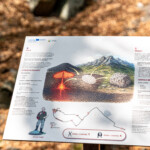
B) At the Spring of Life
Springs are little miracles. A spring – nature’s refrigerator.
A watering place for animals, a refreshing stop for hikers, and a living textbook for us.
What is hiding in the water?
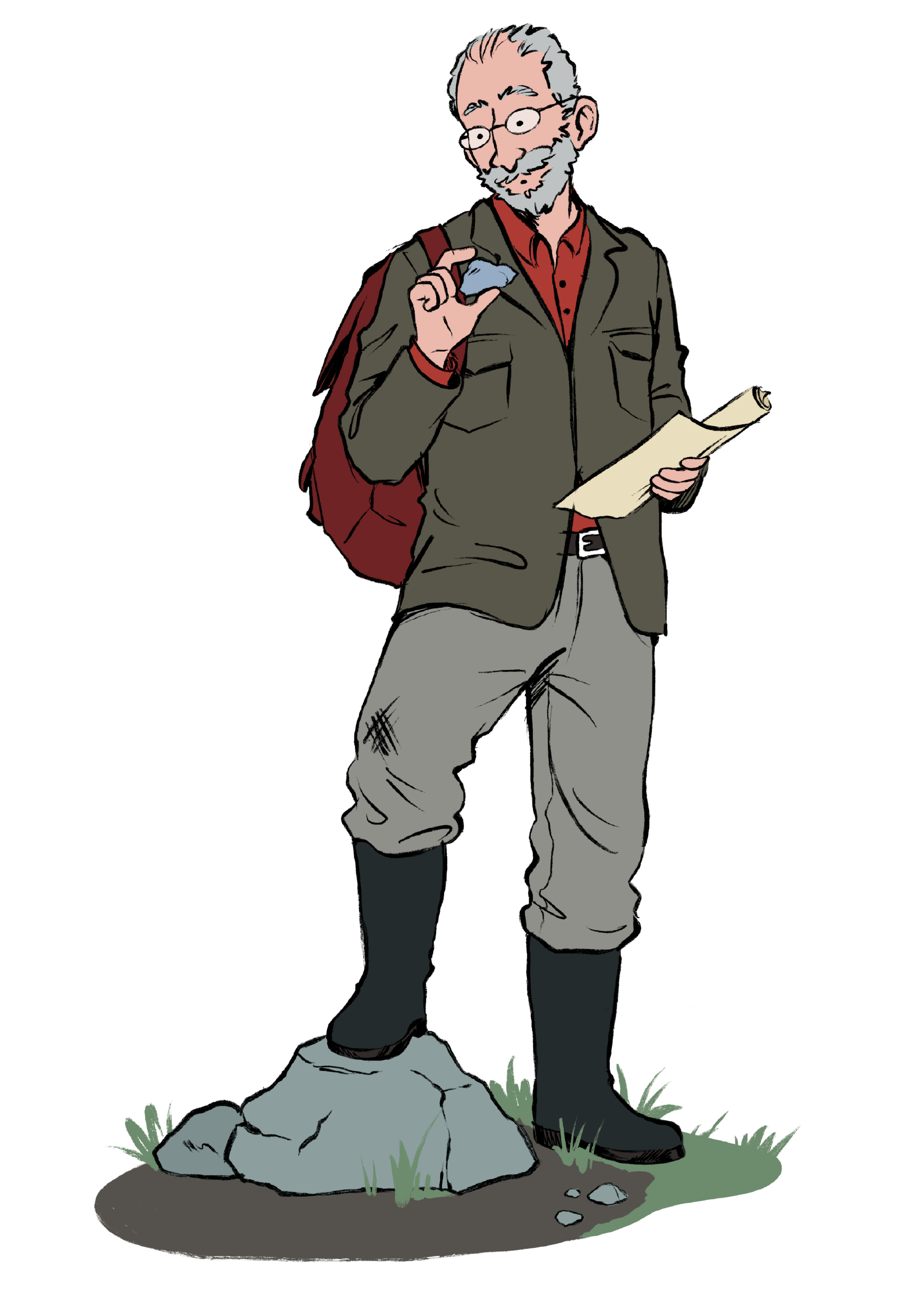
Hi, my name is Tomáš, and I’m a geologist. Water never flows “just like that.” As it travels underground, it carries traces of the rocks it has passed through.
We geologists love looking beneath the surface – and sometimes all it takes is a sip. One sip, and you can taste the rocks beneath your feet.
The Spring – A Geological Tasting Experience
If water emerges from limestone, it is usually harder and richer in minerals. Water from granite, on the other hand, is softer because granite dissolves much more slowly.
A Natural Filter
Something else important happens underground.
Rocks act as a natural filter – they trap impurities, slow down the flow of water, and cool it.
An underground refrigerator without electricity.
Good to know (B)
The Long Journey of a Water Drop
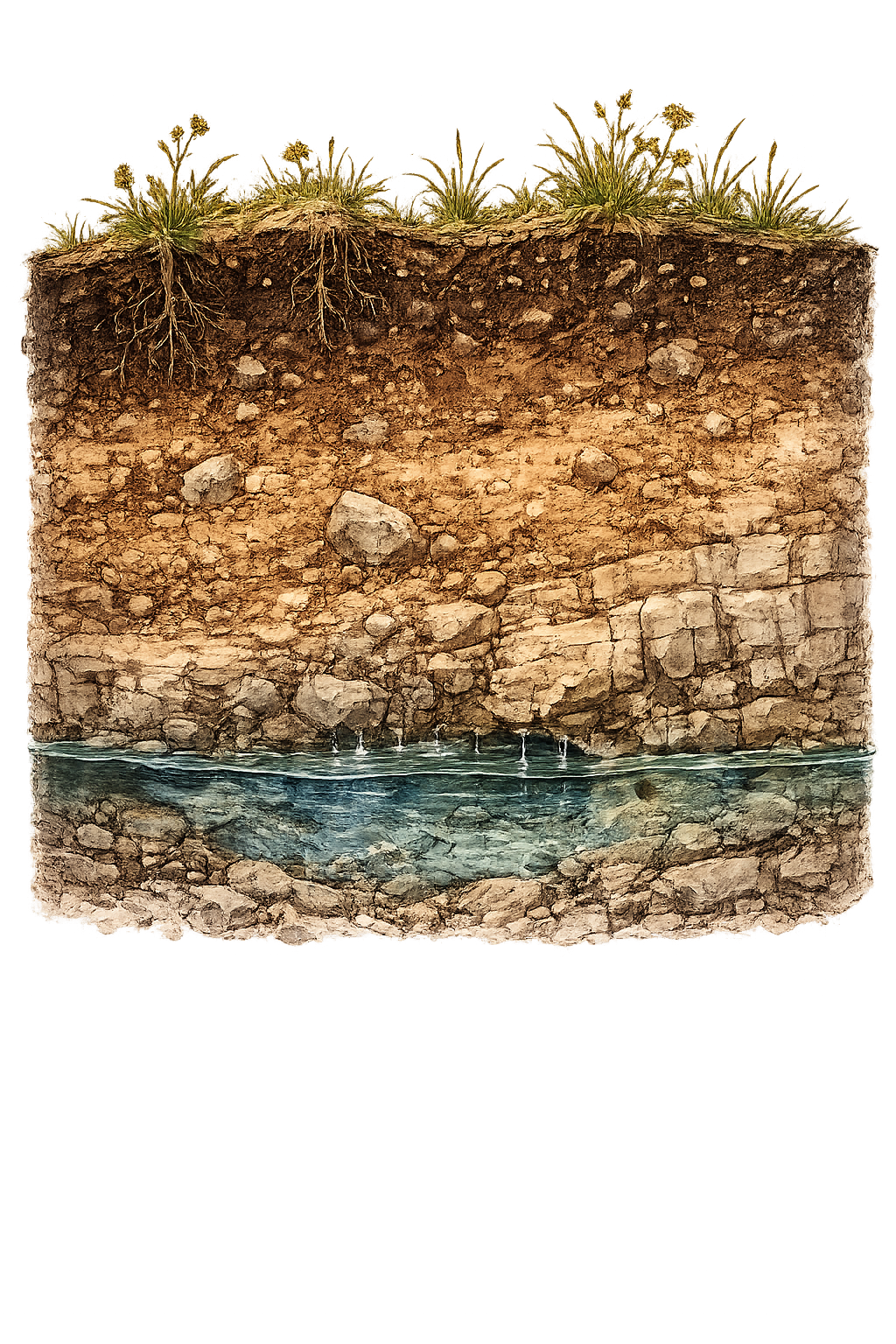
Every drop of water begins its journey as rain. It soaks into the soil and slowly travels through cracks in the rocks. Sometimes its journey takes several months, while other times it can take years.
Only when the water encounters an impermeable layer or finds its way to the surface does a spring form.
Rocks as Natural Filters
As water travels underground, it passes through different types of rock. These trap some impurities, slow its flow, and enrich it with minerals.
If water flows through limestone, it is usually harder and contains more calcium and magnesium. Water from granite bedrock, on the other hand, is generally softer because granite dissolves very slowly.
That is also why every spring has its own unique taste.
A Small Place Full of Life
Springs are an important source of water for animals throughout the year.
Mosses, ferns, small invertebrates, and amphibians thrive in the damp surroundings. Many animals regularly come here to drink, so it is important to keep the area around the spring clean and peaceful.
A Humorous Note to Finish
And if you’d like to taste another “liquid medium” that carries traces of the local geology… try some wine from Pezinok. It is born from the interaction of rocks, water, climate, and human skill.
Activity (B)
Nature’s Water Detective
Take a close look around the spring. Find:
Bonus: Close your eyes for a moment. How many different sounds of water can you identify?
 24
Next Point
Granite