

Sunny Valley is one of the areas where the history of gold mining in the Pezinok mountains can still be traced. Gold occurred in quartz veins and ore-bearing structures in the Little Carpathians.
Mining took place during different periods and was often smaller in scale than the later pyrite and antimony mining operations. Miners followed ore veins using short adits, shafts and surface excavations.
Many of these mining workings disappeared after operations ceased, collapsed or blended into the forest terrain. Waste heaps, depressions and artificially created cuts in the landscape may still remain in the surrounding area.
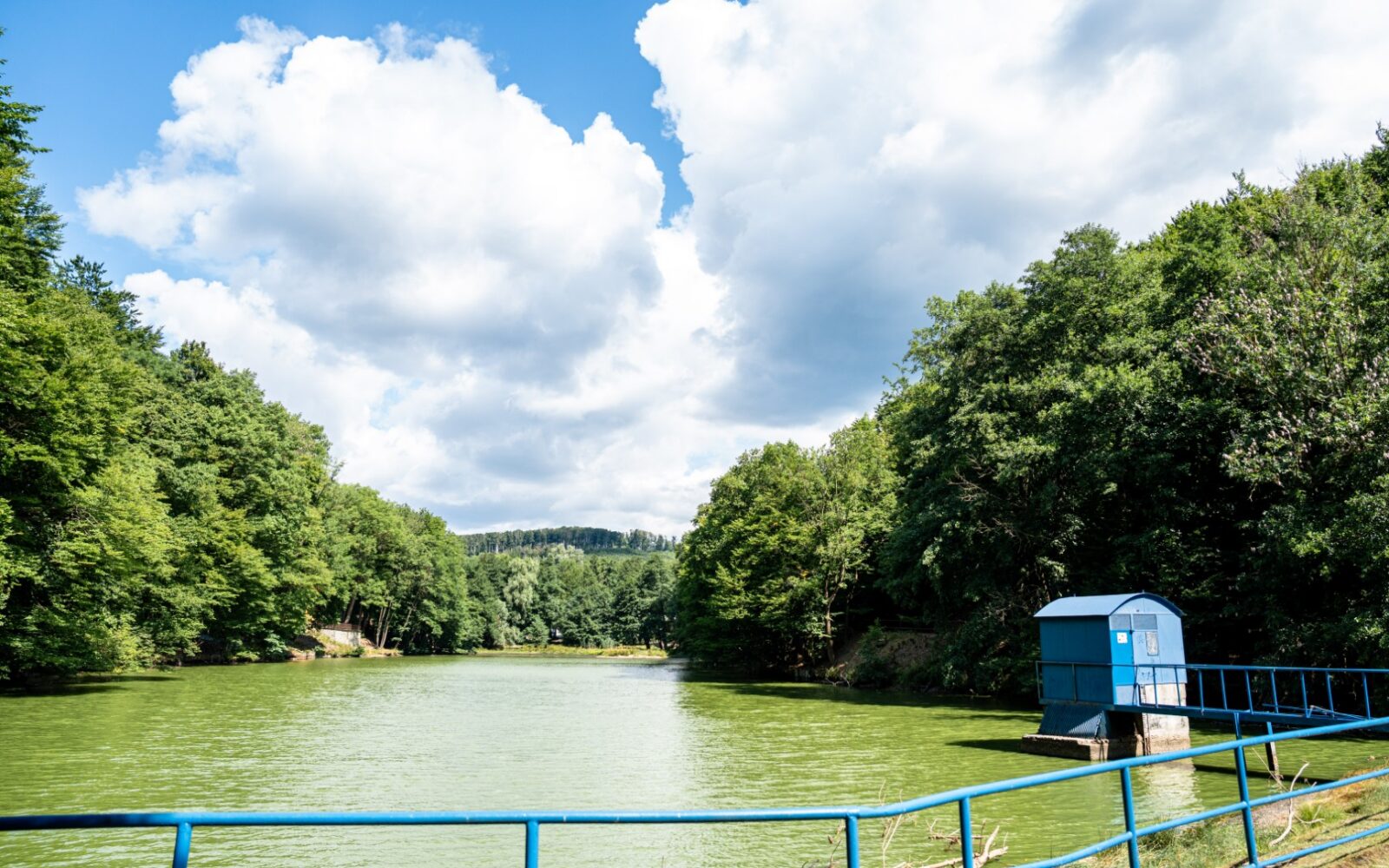
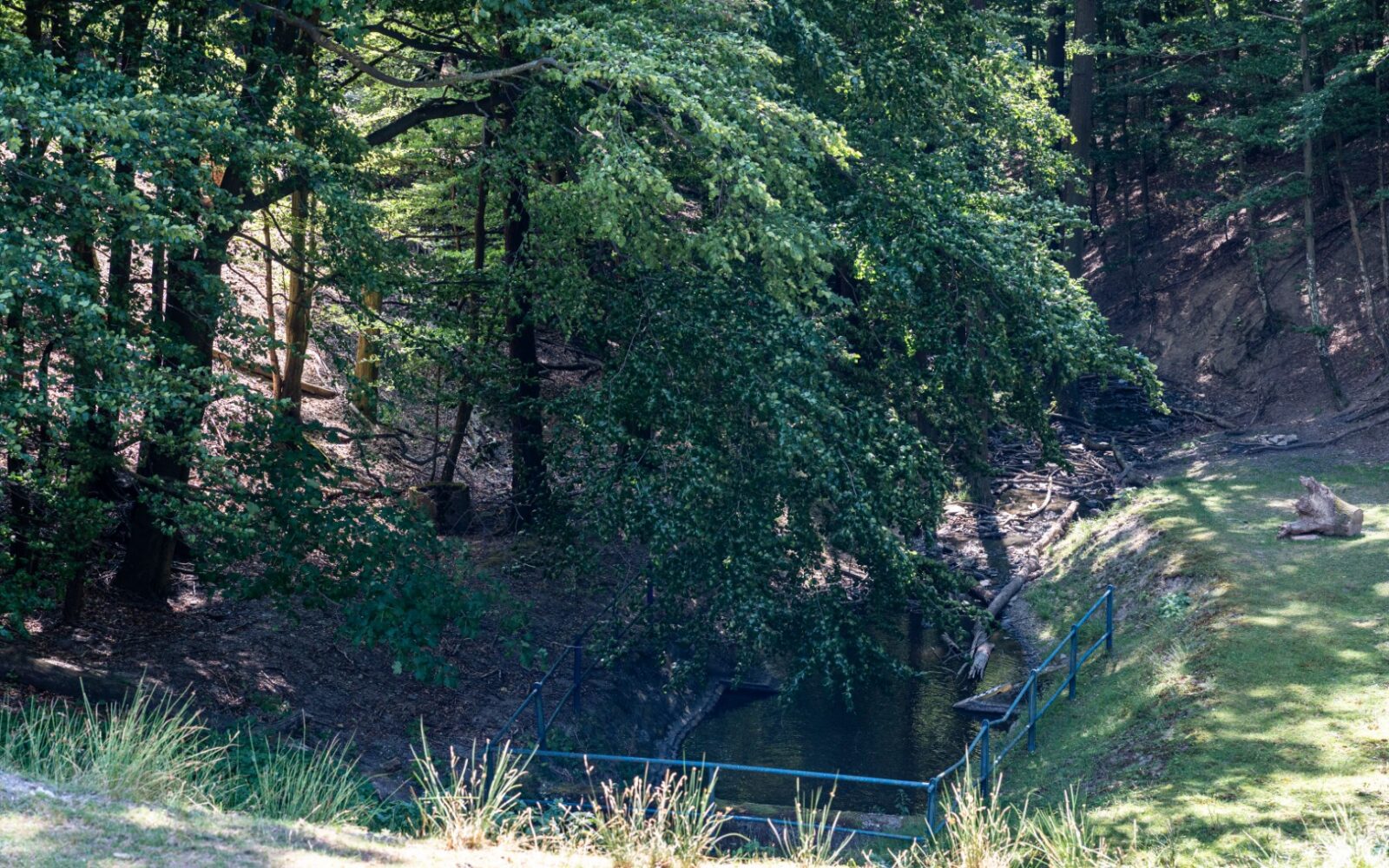
The Gold-Bearing Past of the Landscape
The site offers an opportunity to explain that discovering gold did not automatically mean finding a rich and consistently profitable deposit. Mining was physically demanding and depended on technology, metal prices and the amount of underground water.
Today, Sunny Valley appears to be a natural landscape, but its terrain conceals traces of human activity.
The site recalls the search for precious metals that attracted attention to the Pezinok mountains for centuries.
What Makes Sunny Valley Interesting?
Sunny Valley is a place where today’s recreational landscape can be connected with traces of former gold mining.
Mining and ore-processing facilities once operated in the surrounding area, including stamp mills that mechanically crushed the extracted ore.
The greatest attraction is the opportunity to imagine that this peaceful forest valley was once a noisy workplace filled with water channels, pounding hammers and ore transportation.