

Information Board
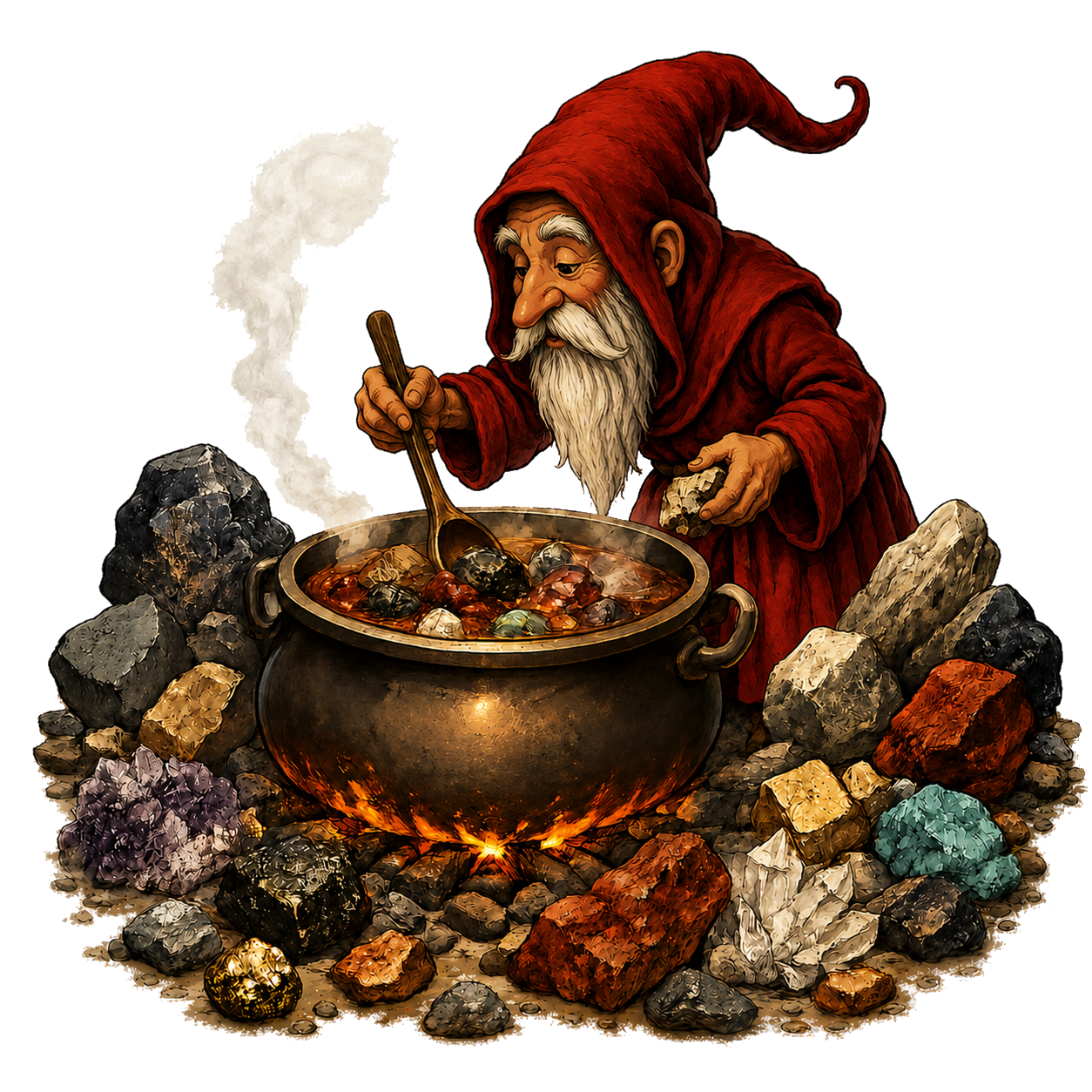
Permoníks are excellent cooks.
In the depths of the earth, they mix, heat, and patiently prepare rocks – from which the world around us is composed. Just look under your feet.
Every rock has its own composition and its own “recipe.”
It forms under different conditions – sometimes more heat, other times more pressure.
And if we disregard time?
It’s actually quite simple “baking.”
Three basic types of recipes:
- Baked dishes – igneous rocks
- Pressed and heated dishes – metamorphic rocks
- Unbaked dishes – sedimentary rocks
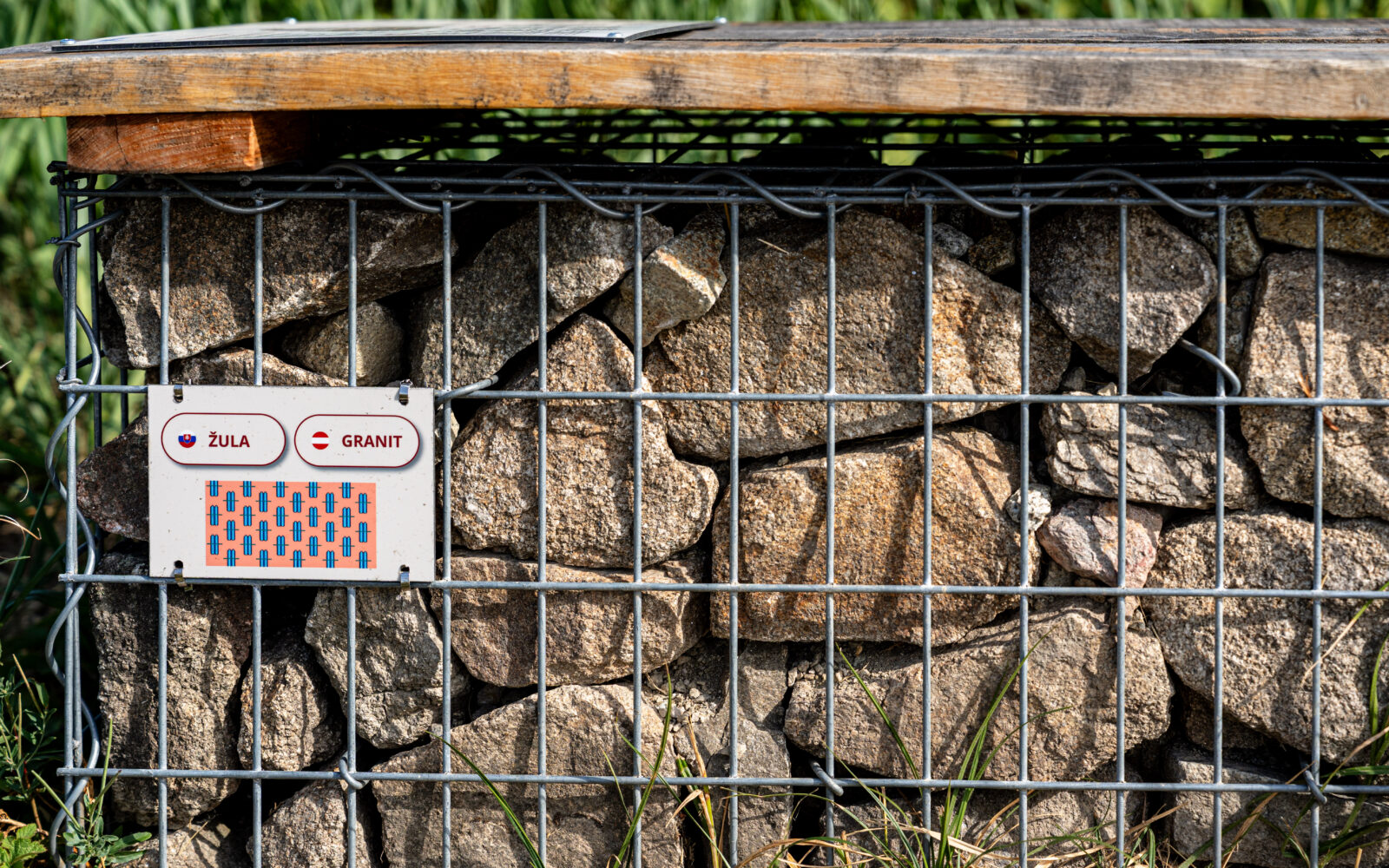
Granite – žula/Pegmatite
For a kilogram of granite, we will need these ingredients:
- 600 g of quartz,
- 350 g of feldspar (e.g., orthoclase),
- about 50 g of mica (biotite – dark, muscovite – light).
Mix the fine-grained ingredients well, place the mixture 10 – 20 km below the Earth’s surface, and heat it to 800°C. Let it cool slowly to form a beautiful granular structure. Wait several million years and then admire the granite on the surface.
Tip for true connoisseurs:
Use a coarse-grained mixture of the mentioned minerals and season it with rare elements like lithium, niobium, or tantalum, and you will get pegmatite.
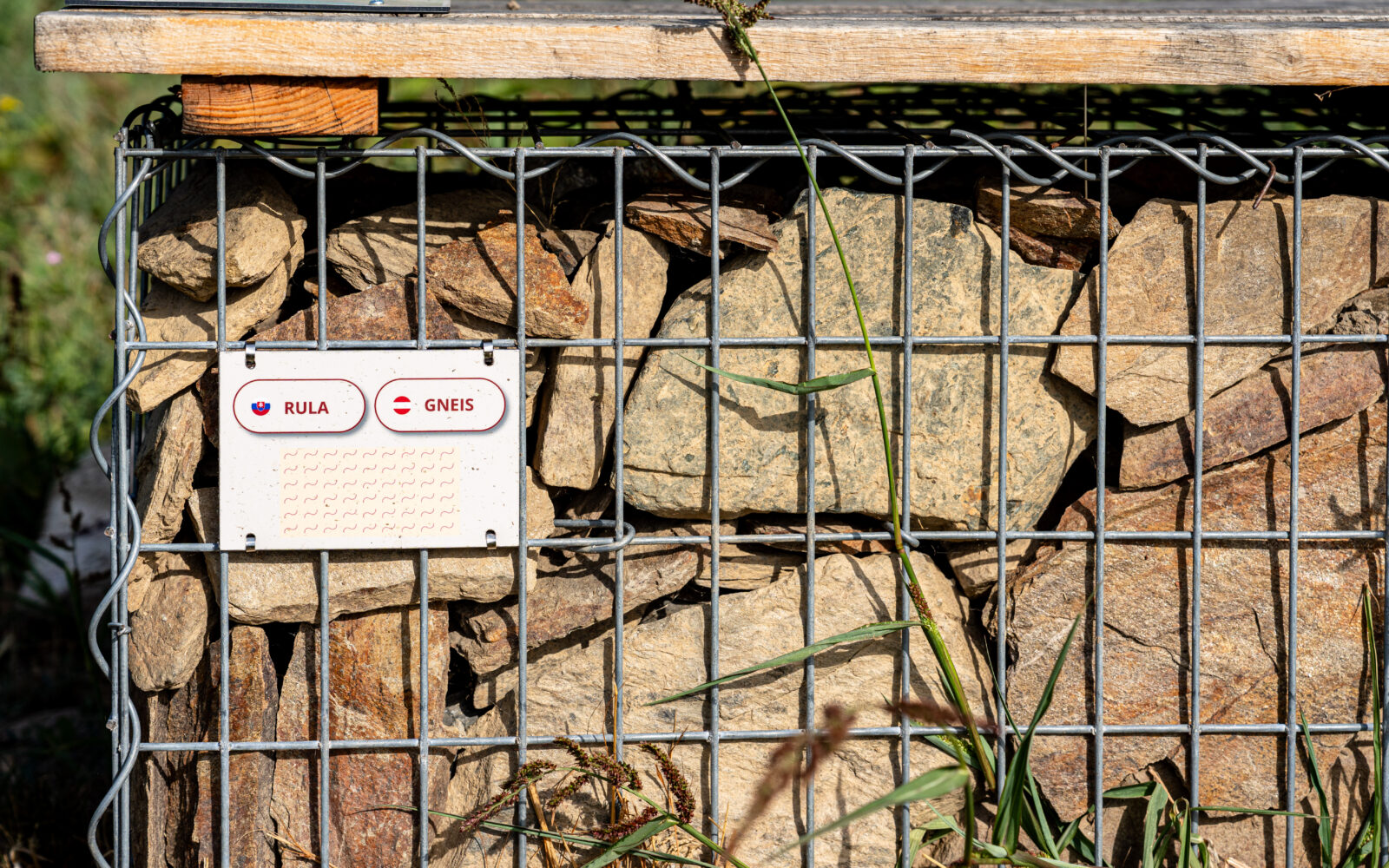
Gneiss
Gneiss is not an igneous rock, but a metamorphic one, so compression plays a larger role in its formation. Its preparation is simpler:
Ingredients for a kilogram of rock:
- 250 – 500 g of quartz,
- 350 – 500 g of a feldspar mixture,
- about 50 g of chlorite,
- about 50 g of mica (biotite – dark, muscovite – light).
For seasoning, we use garnet, albite.
Mix the fine-grained ingredients well, fold the dough several times, and press it down firmly. Heat the mixture to 350 – 500°C and load the surface with approximately 10 – 20 km of other rocks. After cooling, you will see beautiful layers in the cross-section.

Phyllite
A darker version of metamorphic rock, regarding the simplicity of preparation, temperature, and pressure.
Ingredients (per kilogram of rock):
- 400 g of quartz,
- about 400 g of mica (e.g., biotite),
- about 150 g of chlorite,
- up to 50 g of albite.
For seasoning, we use calcite, graphite, magnetite, tourmaline.
The basic ingredients should be finely ground and thoroughly mixed. There should be no pieces larger than 1 mm in the mixture. Supplementary additives, such as magnetite, can be larger.
Phyllite is prepared at low temperatures (about 300°C) and pressure (up to 4 kilobars).
 4
Next Point
Škridláky Crossroads