

Information Board
Silván:
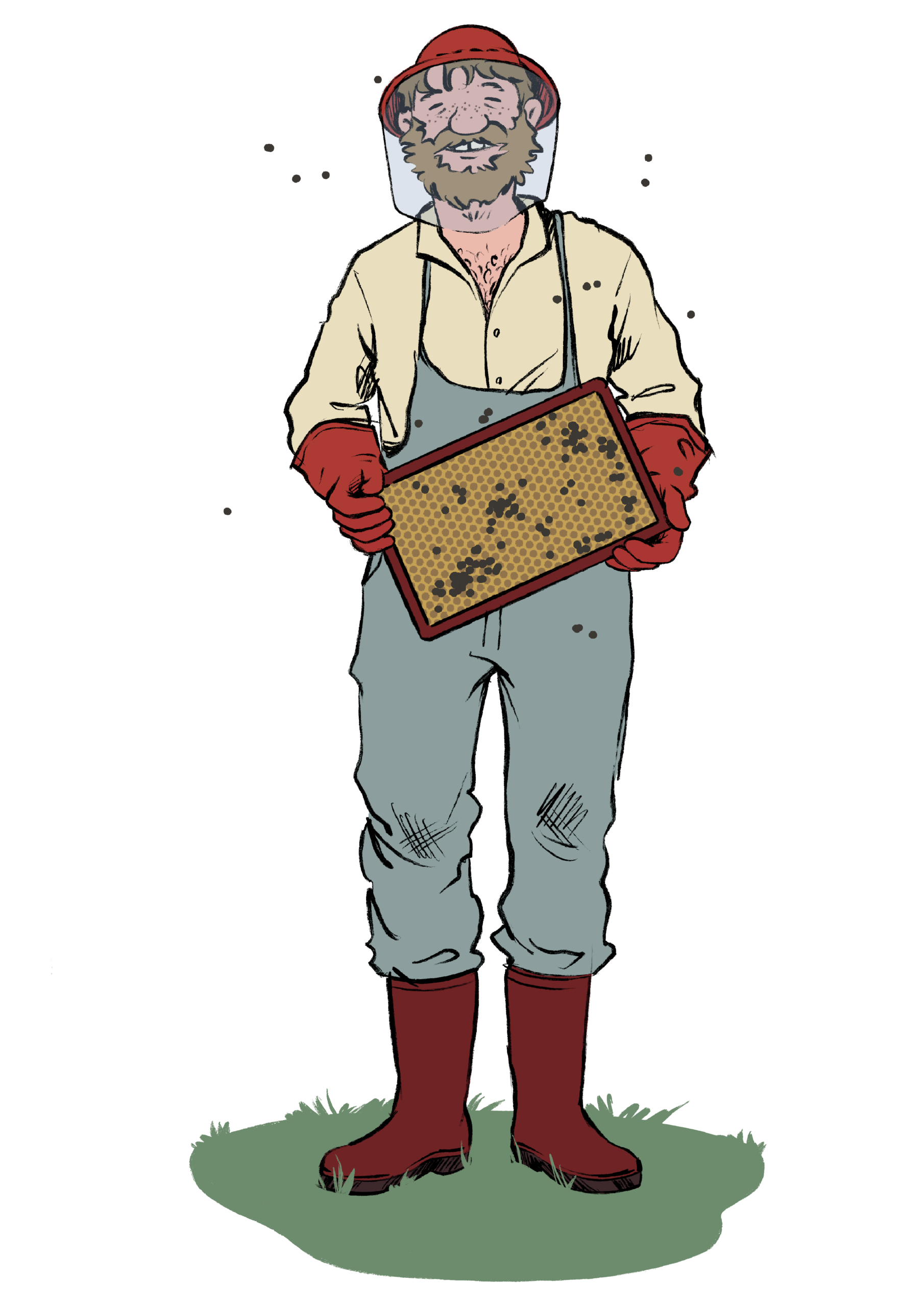
Ambróz, you know bees best. What is happening to them?
Ambróz:
Their numbers are declining. They do not have enough food or a safe environment. And without them, plants cannot reproduce as they should.
Silván:
So if they disappear, it is not just about us not having honey?
Ambróz:
Not at all. Without pollinators, there will be no apple trees, cherries, or peaches. And little by little, life around us will diminish too.
Silván:
And what about the vineyard? That pollinates itself, after all.
Ambróz:
Yes. But it needs a diverse surrounding environment: living soil, insects, birds, trees.
If you spray everything and mow it down to the last centimetre, you will have order… but no life.

Silván:
That is why we changed our approach. We do not mow the meadows all at once. We mow in a mosaic pattern—leaving one part to flower and tending another. We plant hawthorn, blackthorn, hazel, linden, rowan, and service tree. The trees provide shade, retain moisture, and offer a home for insects and birds.
The landscape then becomes more diverse—and stronger.
Ambróz:
Biodiversity is simple: the more species live together, the better they help keep one another afloat.
And when everything works together, harmony emerges.
Silván:
And where there is harmony in nature, there is good wine too.
We speak of BIODIVERSITY when every link—grass, flower, beetle, or bird—has its role.
Learn More
For a healthy vineyard, it is not only the vines that matter. Everything that lives around them matters too.
When the landscape is diverse, the vineyard functions more naturally and is better able to withstand pests and drought.
That is why today the meadows by vineyards are not mown all at once. They are mown in a mosaic pattern, meaning one part is left to flower and the other is mown.
This way, bees, butterflies, and other insects always have somewhere to find food and shelter. Taller grass also helps keep the soil cooler and moister, which is very important on hot days.
Trees and shrubs are planted around vineyards, for example hawthorn, blackthorn, hazel, linden, or rowan.
They provide food and shelter for many animals—birds, insects, and small mammals. Each plant flowers at a different time, so pollinators have food throughout the season.
When there is plenty of life around the vineyard, nature can help itself.
And it is precisely this diversity of life (BIODIVERSITY) that helps keep the landscape healthy and in balance.
Game
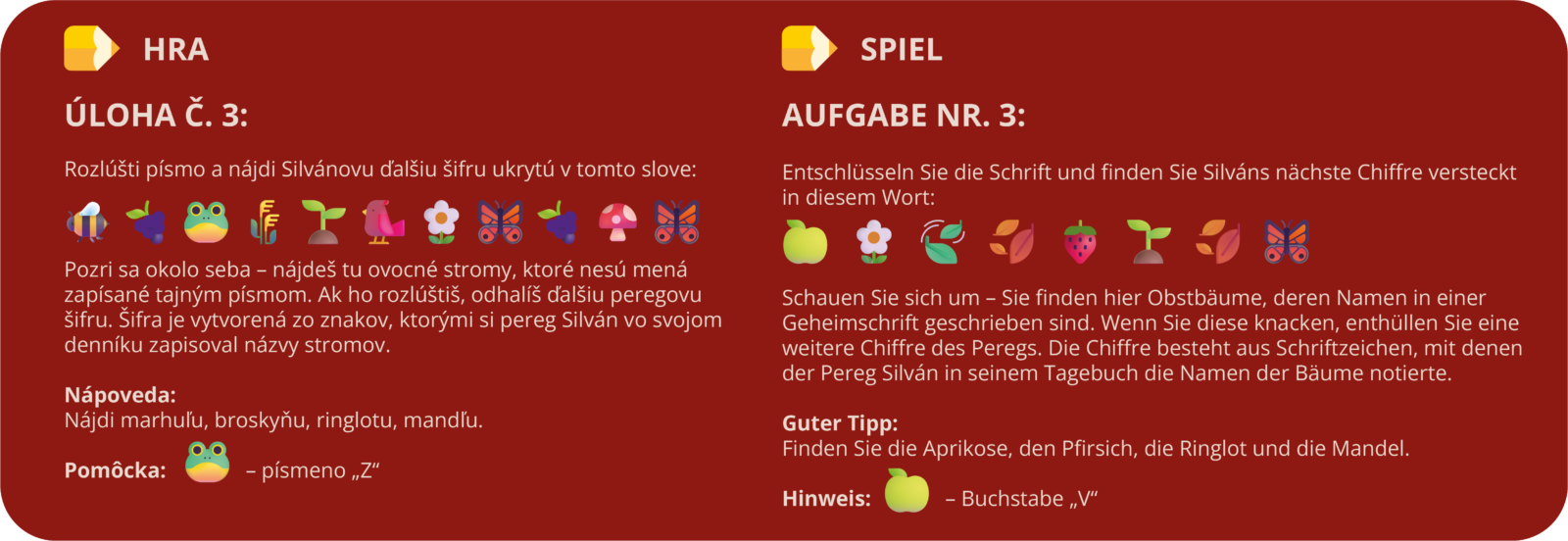
In beekeeper Ambróz’s orchard, various rows of symbols are hidden. Each row of symbols represents one word. It is up to you to decipher the letters hidden behind each symbol.
Decipher them at the individual stations in the orchard. There you will find the names of trees written in a cipher (the number of symbols in the cipher corresponds to the number of letters in the tree’s name).
Decipher the individual symbols and put together the word, which you will later add to Silván’s Pereg clue.
A small hint:
🐸 – the letter “Z”
You will find more ciphers at:
- apricot,
- peach,
- greengage,
- almond.
 7
Next Point
Partner Tree of the City of Pezinok – Almond