

Information Board
The apricot (Prunus armeniaca) is a deciduous fruit tree with a broader crown, valued for its juicy, sweet fruit and early pinkish-white blossoms.
It requires a warm, sunny location protected from frost and well-drained, lighter soil; it is suitable for gardens as well as landscape greenery in warmer areas.

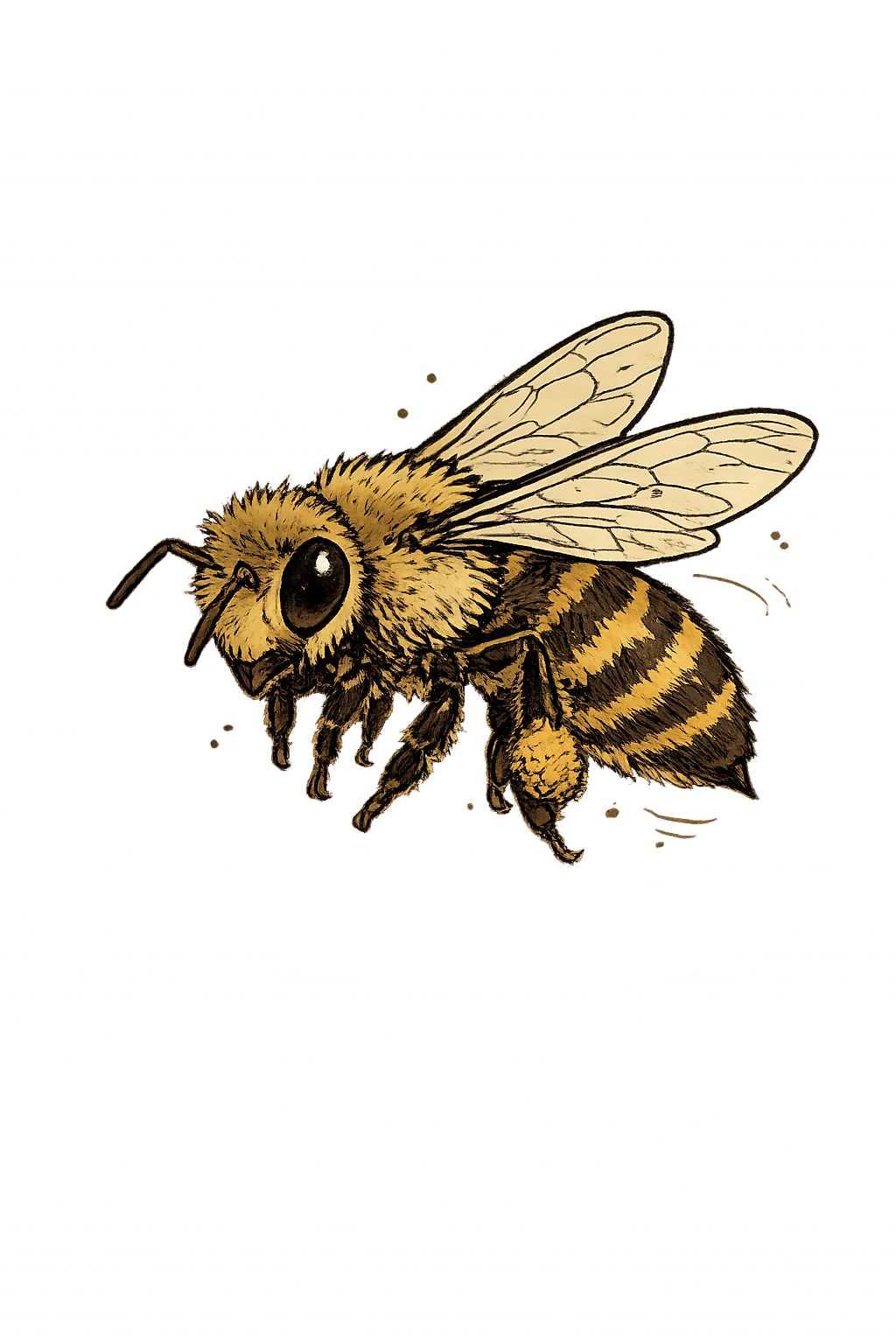
I like to look at the world up close—especially the one we often overlook. Try stopping for a moment and looking into the grass or at the flowers around you. Do you see that bustle? That is the world of insects—small, but very important.
Who pollinates flowers?
You may think that bees do all the work—the Instagram stars. But that is not the case. Bees are extremely important for maintaining balance in nature, but they simply do not pollinate all plant species. Flies, hoverflies, butterflies, and beetles help as well.
And note—many “bees” you see are actually hoverflies. They look similar, but they do not sting. So the next time you see a “bee”, you may be looking at a fly—and perhaps watching a small, quiet hero of biodiversity.
Why are insects important?
Everyone has their role. Some pollinate flowers, others break down plant remains, and others are food for birds. Without insects, the meadow would be quiet. Fewer flowers, less fruit… and less life.
Good to know
The importance of insects in nature
When people say “pollinator”, most imagine a bee. In reality, bumblebees, butterflies, hoverflies, beetles, and other insects also contribute to pollination. Thanks to them, plants can produce fruit and seeds.
When insects fly in for nectar or pollen, pollen grains stick to their bodies. When they visit the next flower, they transfer some of the pollen, helping the plant produce fruit and seeds.
Some species are specialists in pollination, while others help only occasionally. That is why it is important for nature to be diverse and to include many different insect species.
Not all insects pollinate flowers. Some species break down dead plants, others hunt pests, or serve as food for birds, lizards, or small mammals. In nature, everyone has their role, and together they create a functioning ecosystem.
Without insects, there would be fewer flowers, less fruit, and far less life.


ACTIVITY
One-minute explorer
Find a flowering plant and stop quietly beside it for one minute. Do not move—just observe.
How many different flower visitors can you spot? Are they all the same, or do you see differences between them?
You may discover that there is far more activity around a single flower than it seems at first glance.
CoDe MoRe project partner:
NGO Barbora, Slovakia, model region area – Malé Karpaty Geopark,
https://geoparkmalekarpaty.sk/
The non-profit organisation provides services for the public benefit in the creation, protection, and presentation of spiritual and cultural values, and ensures the management of the Malé Karpaty Geopark area.
The geopark covers more than 1,700 km², includes over 70 municipalities including Pezinok, and is significant from a geological, biological, and cultural perspective.
The aim of the management is to promote knowledge and development of the area and to integrate and prepare the area for entry into the UNESCO Global Geoparks Network.

 9
Next Point
Vienna Woods Partner Tree – Peach