

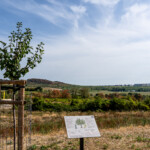
Information Board
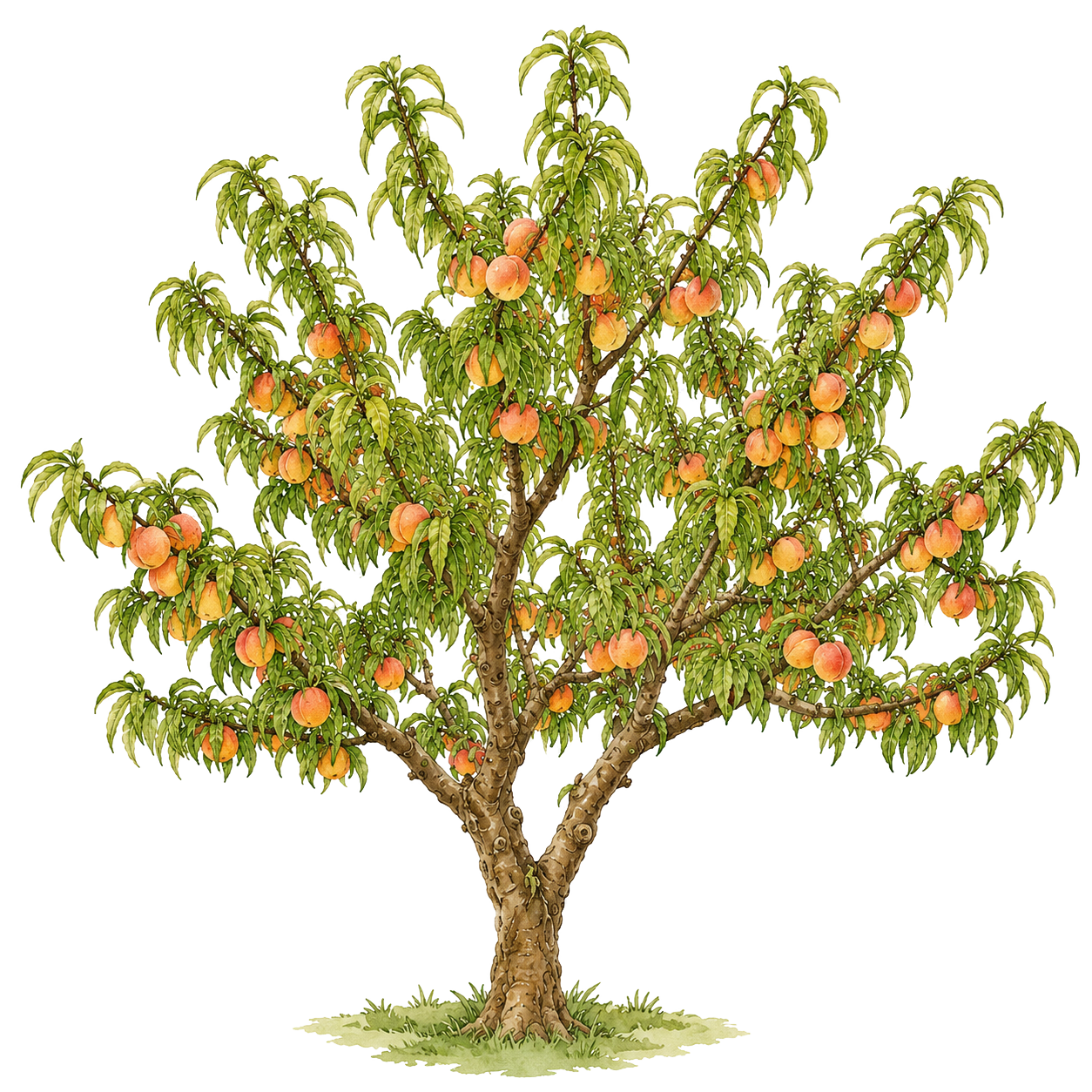
The peach (Prunus persica) is a thermophilic deciduous tree with a delicate crown, notable for its sweet, juicy fruits and pink blossoms that appear early in the spring.
It thrives best in sunny, sheltered locations with lighter, well-drained soil. In addition to its utility in gardens, it serves as an attractive aesthetic element in the landscape.
Solitary bees
You might have thought that every bee lives in a hive. Come and take a closer look with me. Not everything is as it seems at first glance.
Not every bee obeys a queen.
Solitary bees live their own lives – without a hive, without workers, without a queen.
How do you recognize them?
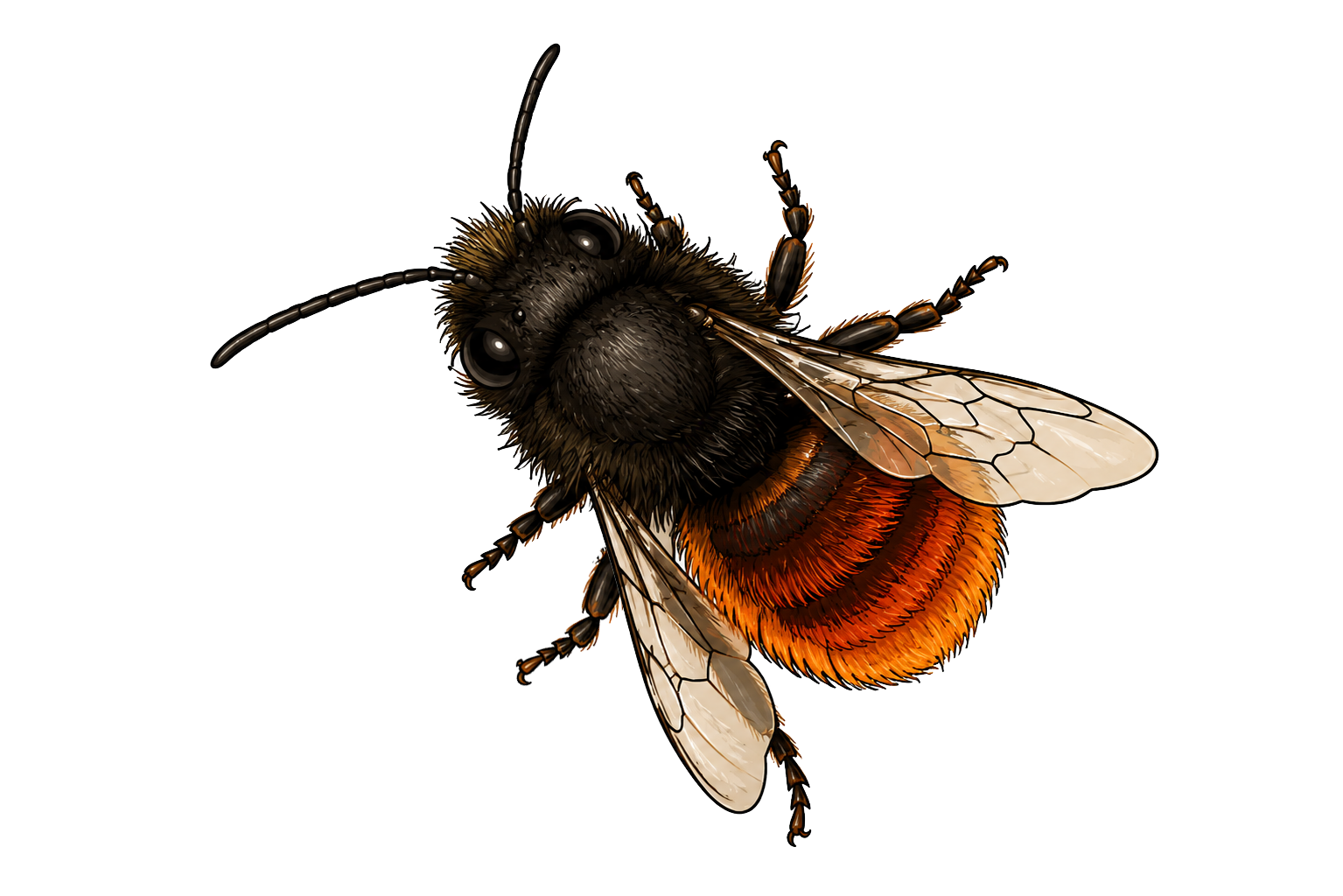
Some look like bees, others you might mistake for a bumblebee or a wasp.
They often have dark bodies and yellow to orange hair on their abdomen – they are like little flying “plushies.”
About their life
The female finds or digs a small chamber – in the ground, wood, or a cavity.
She carries pollen and nectar into it, lays an egg, seals the chamber… and goes to build another.
In this way, she can create several dozen small “rooms with full board.”
I will let you in on a secret…
Approximately 600 species of solitary bees live in Slovakia.
Up to 95% of all bee species in the world live exactly like this – alone.
Learn More
Not all bees live in a hive
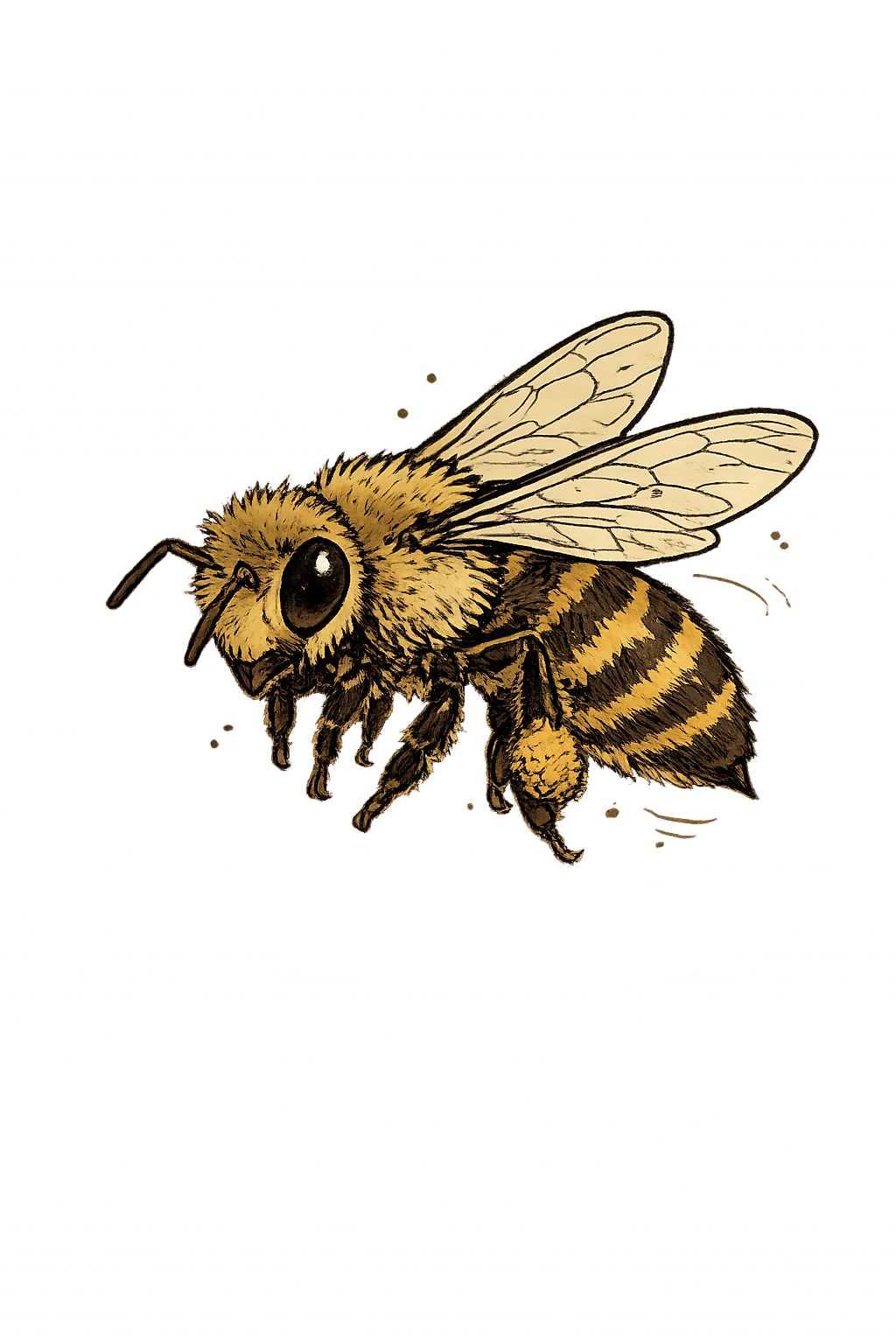
When people say bee, most imagine the honeybee. It lives in large communities with one queen and thousands of workers. In the hive, they cooperate as a perfectly coordinated team and produce honey.
However, there are many more species of bees in the world. Most of them are solitary bees. Each female builds a small nest herself in the ground, in a hollow stem, or in old wood, prepares food for her young, and takes care of everything without help from others.
Violet carpenter bee – the carpenter among bees
Some solitary bees, such as the violet carpenter bee, are among the largest bees in Europe. They create their nests in old wood or in hollow plant stems.
Despite their large bodies, they are peaceful and only exceptionally attack humans. They are also among the important pollinators.
Good to know
Bee or wasp?
At first glance they look similar, but their lives are completely different.
Bees have hairy bodies, collect pollen and nectar, and help pollinate flowers. Wasps are slenderer, have smooth bodies, and hunt other insects or seek out sweet food.
However, wasps are also useful for nature – they help regulate the number of pests.
ACTIVITY
Truth or Myth
Decide whether the statement is true:
- All bees produce honey.
- Most bee species live alone.
- Wasps are useless for nature.
- Bees help pollinate flowers.
Correct answers: NO – YES – NO – YES

CoDe MoRe Project Partner:
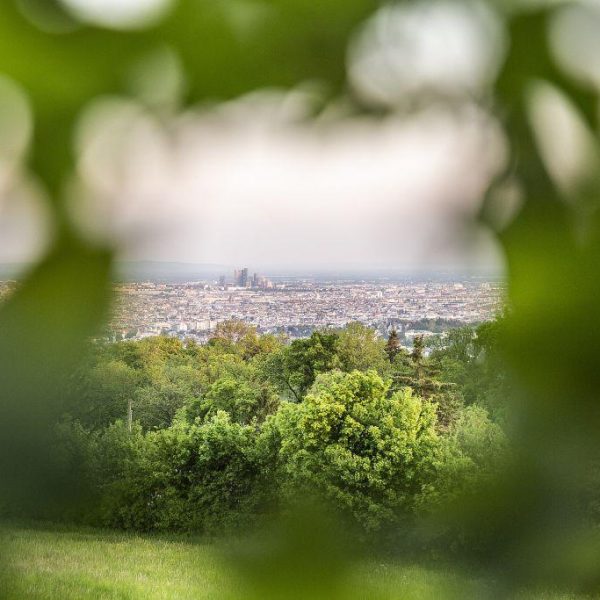
Vienna Woods Biosphere Reserve / Management Ltd. Austria model region territory – Vienna Woods Biosphere Reserve;
https://www.bpww.at/
Biosphärenpark Wienerwald Management GmbH was founded by the federal states of Vienna and Lower Austria after the recognition of the Vienna Woods as a UNESCO Biosphere Reserve in 2005.
Its role is to contribute to the protection of the landscape, ecosystems, and biodiversity, to support ecologically, economically, and socio-culturally sustainable development, and to implement environmental education, research, and monitoring programs.
 10
Next Point
Partner Tree Economic Agency – Greengage