

Information Board
You are standing on granite, which is exposed here at the surface. The surrounding area consists of slope sediments – material transported from higher parts of the Little Carpathians.
You can find various types of rocks here: granites, gneisses, phyllites, mica schists and amphibolites.
Granite is like a crunchy biscuit – solid, but when time starts to break it down, it crumbles into pieces.
All it takes is wind, water, a few temperature changes… and, most importantly, a generous amount of time…
Let’s say a few million years.
Then it begins to crack, crumble and form shapes that make you wonder:
“Did someone carve that?” No. Nature was simply in one of its “moods”.
What is granite made of?
Granite contains:
- quartz;
- feldspar;
- mica.
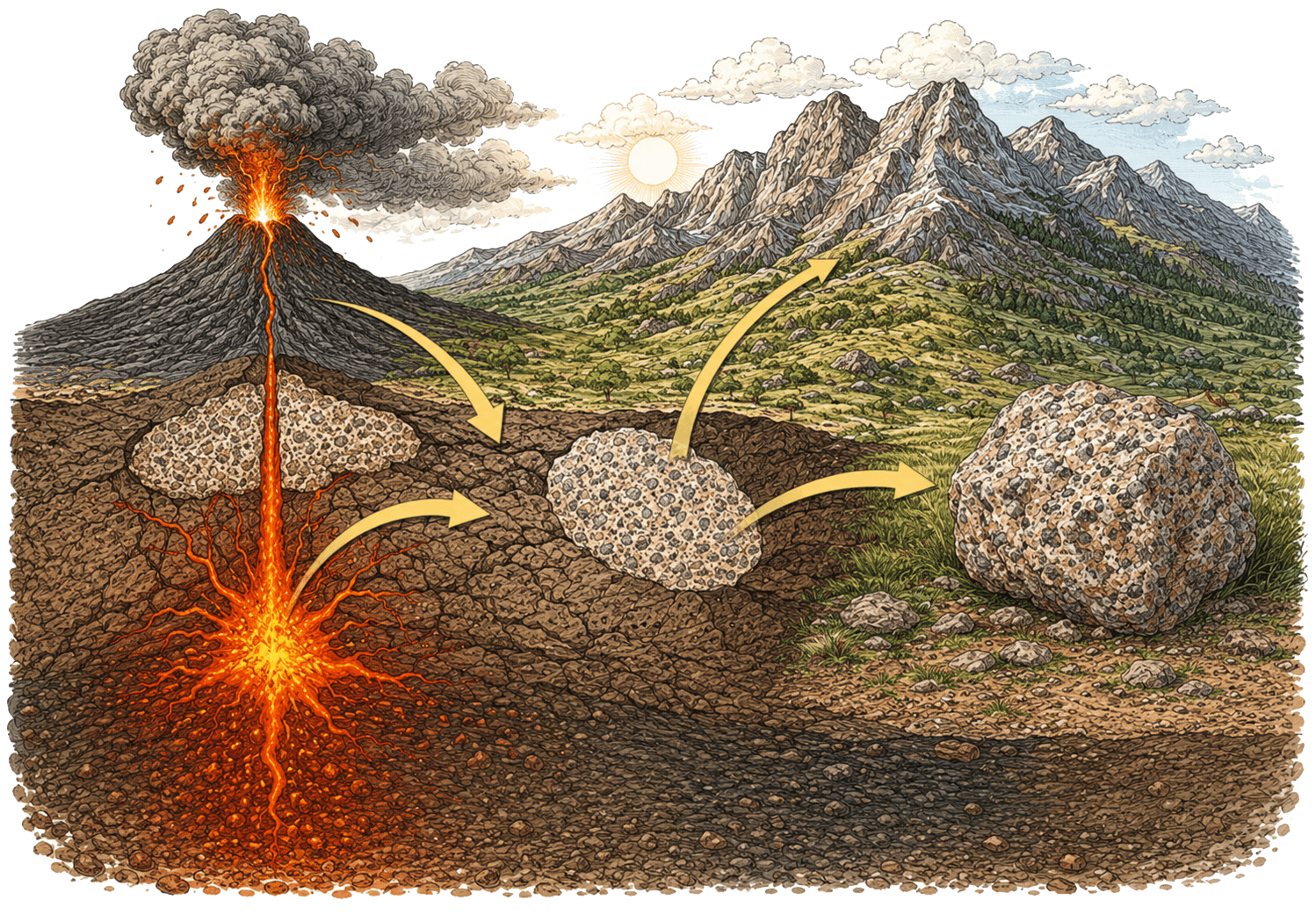
It formed from magma deep beneath the Earth’s surface.
How to Read the Landscape
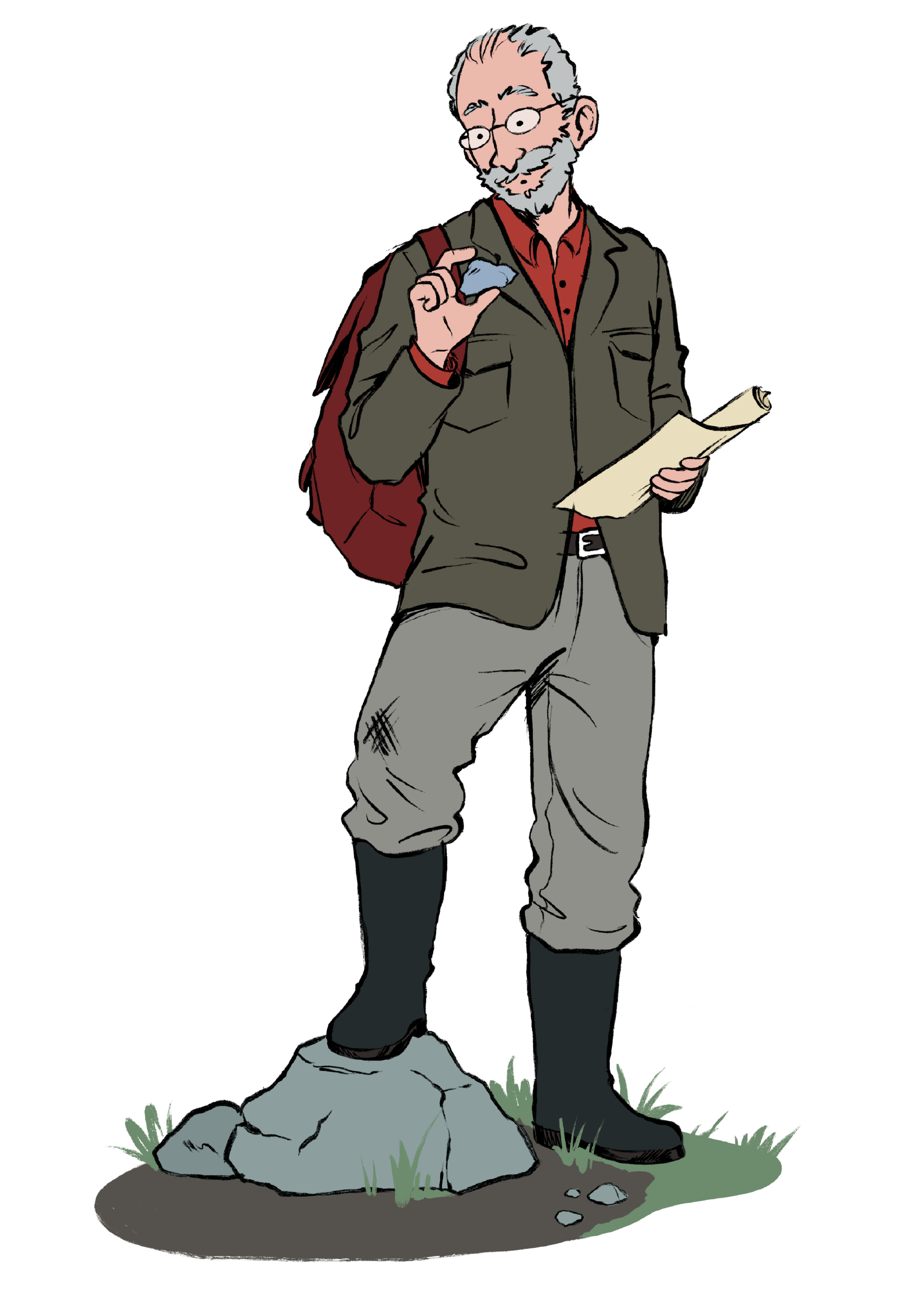
Geologists study rocks from three perspectives:
- material (composition);
- process (formation and development);
- form (present-day appearance).
It is the form that “tells” us the most about the landscape’s history.
Try It Yourself
You don’t have to be a geologist.
Just stop for a moment, take a little time (even a few minutes instead of millions of years) and let your imagination run wild.
Can you see a face in the rocks? An animal? A castle? A giant? Look for shapes and give them names.
Become a storyteller of the rocks for a moment.
Good to know
What Is Geodiversity?
GEODIVERSITY is the framework of the landscape. It consists of the diversity of rocks, landforms and the landscape around us.
Without it, there would be no soil, forests or vineyards.
How Granite Shapes the Landscape
Granite is not just the rock beneath our feet. It also influences the type of soil that develops on it and which plants can grow here.
Because granite weathers very slowly, it produces acidic soils with relatively few nutrients. Not all plants thrive in these conditions. Oaks, however, have adapted particularly well and now form the characteristic forest surrounding the Pereg House.
From Rock to Forest
Rocks form the foundation of the entire landscape. They give rise to soil, which influences plant growth. Plants, in turn, provide habitats for animals.
That is why geologists talk about geodiversity – the diversity of rocks, soils and landforms. It is, in a way, the framework of nature. Without it, forests, meadows and vineyards would not exist.
The oak forest surrounding the Pereg House also contrasts with the shrubs and old fruit trees that recall the area’s former vineyard landscape. This contrast contributes to the unique atmosphere of this place.
CREATIVE CHALLENGE
What Can You See in the Rock?
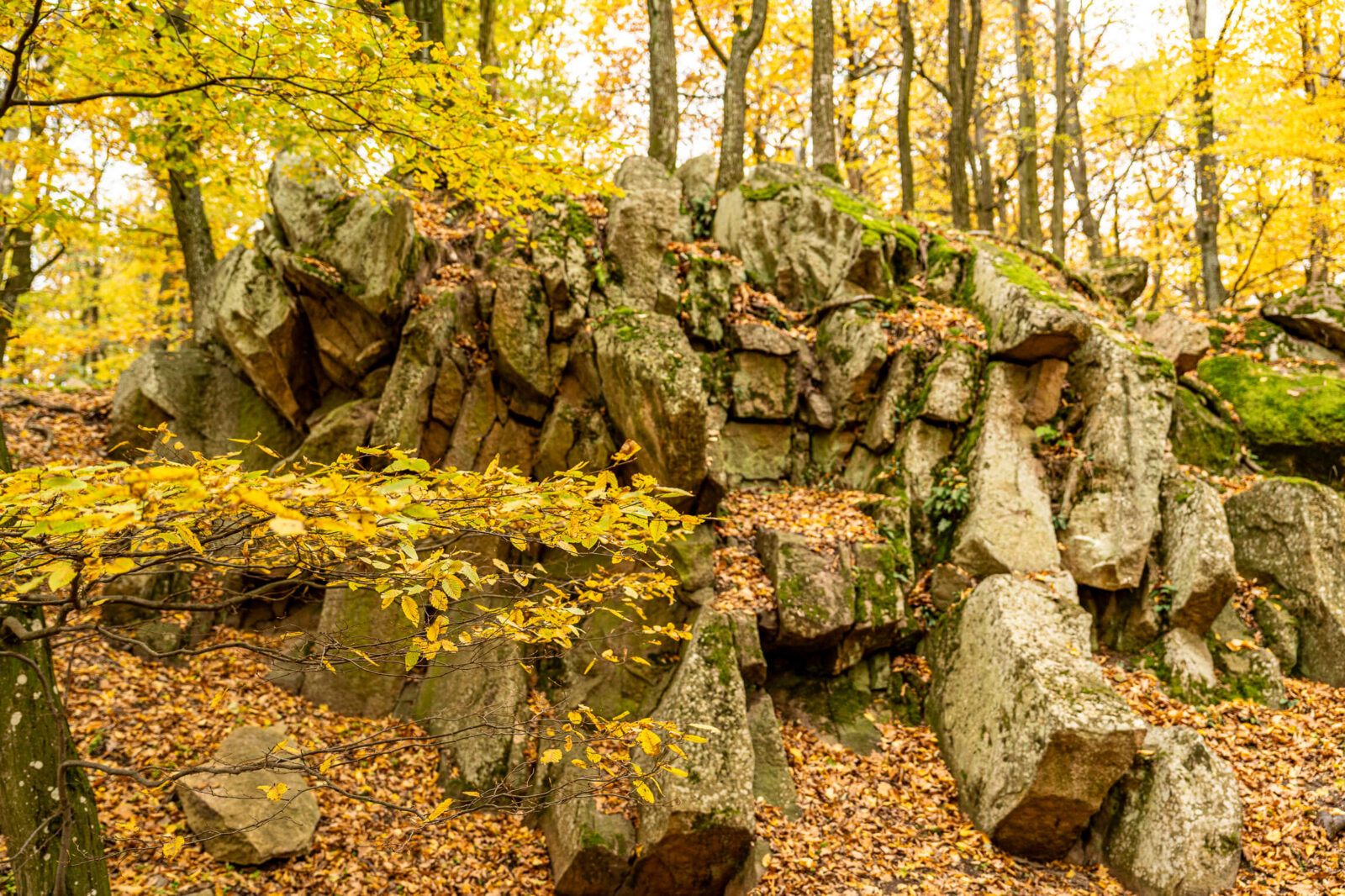
Take a close look at the large granite formation. Do its shapes and outlines remind you of anything familiar?
Perhaps you can spot a face, an animal, a figure or a fairy-tale creature. Use your imagination, discover your own shape and try giving it a name.
 25
Next Point
Stone Pile at Grandma Dorka’s